Thursday, May 28, 2026 |Navi Mumbai
--:-- | --°C | AQI --
If it's not on Unbox Daily HQ, it's not a Launch. Every product, policy and brand launch in India. One hub. What's new?
The VB G-Ram G initiative increases administrative budgets to 9 per cent and mandates unemployment allowances for delays.
The Essentials
The Pulse
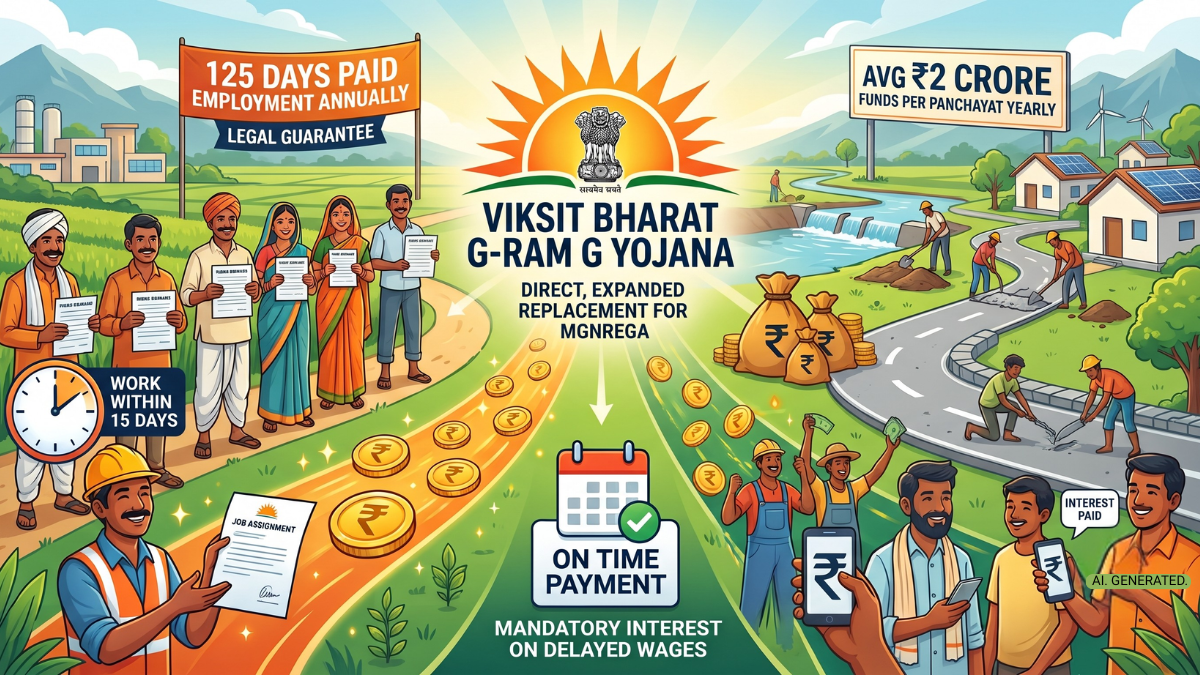
The Central government has replaced MGNREGA with a new rural employment framework that legally guarantees 125 days of work per year. This marks a 25-day increase over the previous system, fundamentally shifting how rural labour is compensated and managed.
A major structural change is the strict adherence to timelines. Labourers who demand work but do not receive it within 15 days are now legally entitled to an unemployment allowance. Furthermore, any delay in wage disbursement will automatically incur interest payments to the worker.
Implementation moves away from top-down directives, placing decision-making power directly with local Gram Sabhas to determine infrastructure needs. To support this decentralisation, the administrative expenditure allowance has increased from 6 per cent to 9 per cent, ring-fencing ₹13,000 crore specifically for the timely salaries of field staff.
Andhra Pradesh serves as the starting point and primary beneficiary in this initial phase. The state receives a special ₹7,707 crore package for the next nine months, alongside approvals for over 74,000 rural homes and ₹422 crore for new rural roads.
ⓘ Sponsored: Unbox Daily HQ earns a commission if you buy through these links, at no extra cost to you. Prices shown are subject to change, and the actual price on Amazon at the time of purchase may vary from what is displayed here.
The Snapshot
| Specification | Detail |
| Programme Name | Viksit Bharat – G-Ram G (Gramin) Yojana |
| Employment Guarantee | 125 days per year |
| Minimum National Wage | ₹300 per day |
| Andhra Pradesh Wage | ₹312 to ₹315 per day |
| Panchayat Allocation | Over ₹2 crore per year on average |
| First Year Budget | ₹1.51 lakh crore |
| Five-Year Target | ₹7.5 lakh crore |
| Administrative Budget | 9 per cent (₹13,000 crore) |
| Work Provision Deadline | 15 days from demand |
The Big Picture
India’s rural employment landscape has relied on the 100-day MGNREGA framework for nearly two decades. Upgrading this to 125 days under the VB G-Ram G scheme directly addresses chronic rural underemployment and shifting agricultural cycles. By routing ₹7.5 lakh crore directly to 2.86 lakh panchayats over five years, the bypasses traditional bureaucratic bottlenecks. The shift toward digital master rolls, Aadhaar-based payments, and real-time geo-tagging specifically targets the historical leakage and ghost-worker issues that plagued earlier state and national rural funding models.
The India Prospective
For rural citizens, particularly in Andhra Pradesh, this launch translates directly into physical infrastructure and income stability. The national minimum wage floor is now set at ₹300, with Andhra Pradesh residents receiving between ₹312 and ₹315 per day. Beyond daily wages, the accompanying approvals deliver 74,212 concrete houses to replace temporary structures, alongside 146 new roads and 19 bridges designed to connect previously isolated villages to wider state networks.
The Inside Intel
The most significant shift is not the extra 25 days of work, but the creation of accountability mechanisms for the government itself. If local authorities fail to provide work within 15 days, they must pay an unemployment allowance out of their funds. If they delay wages, they must pay interest to the labourer. This fundamentally transforms rural employment from a welfare request into an enforceable legal right.
The Unboxed Truth
Unbox Daily HQ views this transition from MGNREGA to VB G-Ram G as a critical structural correction in India’s rural economy. The success of this ₹7.5 lakh crore commitment rests entirely on its strict enforcement of interest on delayed wages and the 15-day unemployment allowance clause. By integrating real-time digital monitoring and shifting project decisions directly to Gram Sabhas, the scheme attempts to plug historical financial leakages. If the administrative expansion to 9 per cent successfully stabilises field staff operations, this will establish a far more reliable safety net for rural households facing agricultural volatility.
Best for: Rural agricultural workers in tier-three regions who need reliable daily wage work between primary crop harvest seasons
Who Is This For: Perfect for 18 to 60-year-old rural citizens in agrarian economies who require a legal guarantee of income when private farming work dries up
The Checkout
The Source
Ministry of Rural Development | PIB.GOV
The Query
The Viksit Bharat – G-Ram G Yojana is available nationwide across all 2.86 lakh gram panchayats in India. The programme features a first-year budget allocation of ₹1.51 lakh crore, scaling to a five-year target of ₹7.5 lakh crore. Each local panchayat receives an average of over ₹2 crore annually for development.
The Viksit Bharat – G-Ram G Yojana guarantees 125 days of rural employment per year, whereas MGNREGA only offered 100 days. It also introduces legal penalties for delays, forcing authorities to provide work within 15 days or pay an unemployment allowance. Additionally, workers receive mandatory interest payments if their wages are delayed.
The Viksit Bharat – G-Ram G Yojana is designed for rural agricultural workers between 18 and 60 years old who require stable income when private farming work dries up. The guaranteed ₹300 minimum daily national wage provides excellent financial protection against agricultural volatility. The enforcement of interest on late payments makes it highly reliable for tier-three households.