Thursday, May 28, 2026 |Navi Mumbai
--:-- | --°C | AQI --
If it's not on Unbox Daily HQ, it's not a Launch. Every product, policy and brand launch in India. One hub. What's new?
Global trials of ISAC technology in the 7 GHz band aim to replace dedicated radar with standard cellular signals.

The Essentials
The Pulse
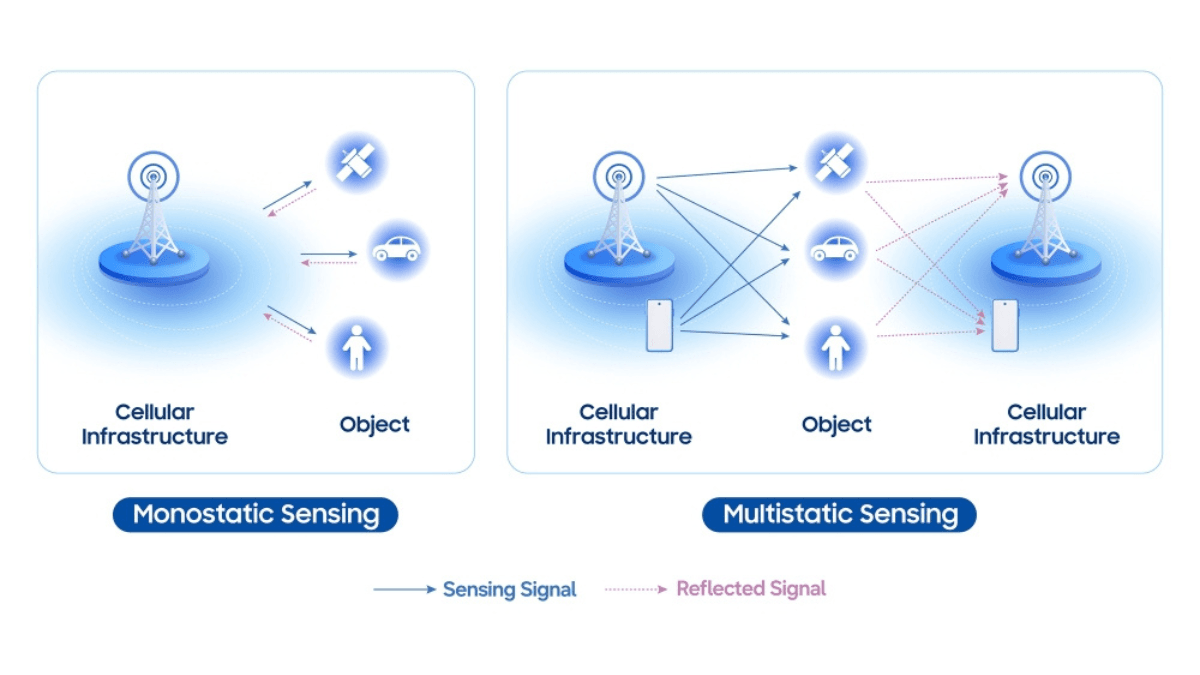
Samsung and LG Uplus have partnered to research a new 6G telecommunications standard that turns standard cellular and Wi-Fi networks into environmental sensors. Known as ISAC, this technology reads the wireless signals bouncing off nearby objects to determine their speed, distance, and direction of movement. Unlike current tracking methods, it does this entirely through existing network infrastructure rather than relying on dedicated cameras, radar, or light detection equipment.
For Indian users, there is no immediate timeline for when this standard will arrive on local networks, as global testing is still in its early stages. What makes ISAC significant is its ability to operate where traditional sensors fail. Because it relies on radio waves instead of optics, the system can track drones, robots, or even human movement in complete darkness and through physical obstructions.
The companies will first validate these capabilities for basic human detection and network efficiency. As research progresses, they plan to combine this wireless location data with visual imagery using multimodal artificial intelligence, aiming to improve overall detection accuracy.
The Snapshot
ⓘ Sponsored: Unbox Daily HQ earns a commission if you buy through these links, at no extra cost to you. Prices shown are subject to change, and the actual price on Amazon at the time of purchase may vary from what is displayed here.
| Specification | Details |
| Technology | ISAC (Integrated Sensing and Communication) |
| Developers | Samsung Research and LG Uplus |
| Target Standard | 6G |
| Testing Frequencies | Existing 5G networks and 7 GHz band |
| Replaces | Dedicated LiDAR and radar sensors |
| Primary Use Cases | Human detection, drone tracking, traffic monitoring |
| Availability | Available globally – India: not yet confirmed |
The Big Picture
The International Telecommunication Union has already designated ISAC as one of three key pillars for 6G development. Mobile networks are shifting from simply transmitting data to actively mapping the physical world. While Indian telecom operators like Jio and Airtel are currently focused on stabilising 5G infrastructure, global hardware manufacturers are looking ahead to networks that double as security and logistics tools. By removing the need for separate tracking hardware, companies can significantly reduce the cost of monitoring industrial sites and urban traffic.
The India Prospective
The ISAC technology is designed to be validated on existing 5G networks first. While India has widely deployed 5G infrastructure via local operators, this specific joint research is restricted to LG Uplus infrastructure in South Korea. There is currently no confirmed data on when or if these 7 GHz band trials will expand to Indian telecom infrastructure or local spectrum allocations.
The Inside Intel
While full 6G deployment remains years away, the initial public demonstrations of these combined wireless and artificial intelligence technologies are already scheduled. Samsung completed joint technology showcases with global partners at the Silicon Valley Future Wireless Summit in November 2025. This was followed by a subsequent validation presentation alongside the AI-RAN Alliance at the Mobile World Congress in March 2026.
The Unboxed Truth
Unbox Daily HQ recommends tracking this development if you work in logistics, urban planning, or industrial automation. Since this is an underlying network technology rather than a retail product, there is no direct consumer price to evaluate. The single element that makes it worth your attention is the ability to monitor facilities and track movement without buying separate radar hardware. If and when this reaches India, expect enterprise pricing models rather than individual consumer plans, making it a critical development for industrial operations directors to monitor. We suggest waiting to see the practical demonstrations late next year before factoring this into any commercial infrastructure plans.
Best for: Telecom infrastructure professionals who need early visibility on future network standards
Who Is This For: Perfect for 30 to 55-year-old network engineers and operations directors in industrial sectors who are planning long-term safety upgrades
The Checkout
The Source
Samsung Global
There is currently no confirmed timeline or availability for ISAC technology deployment in India. While local operators have widely deployed 5G infrastructure, this specific network research is currently restricted to South Korea. Domestic spectrum allocations and commercial release dates have not yet been established.
This technology utilises standard cellular and Wi-Fi networks to transmit wireless signals that bounce off nearby objects. By analysing these reflected signals, the system determines the speed, distance, and direction of a moving object. This allows it to function effectively in low-light conditions and behind physical obstructions where traditional optical sensors fail.
Telecom infrastructure professionals, network engineers, and industrial operations directors should follow these developments to plan long-term safety upgrades. The technology is designed to monitor facilities and track assets without the need for separate radar hardware. If this system eventually reaches the domestic market, it will involve enterprise pricing models rather than individual consumer plans.