UNBOX DAILY HQ.: India’s First Launch Only Hub for Modern Lifestyle | 150+ New Launches Tracked Last Month Across India • 14 Categories • 1 Destination – UNBOX DAILY HQ.| EXPLORE BY CATEGORY: • BUSINESS & SERVICES | • CONSUMER DURABLES | • CONSUMER GOODS | • EDUCATION | • ENTERTAINMENT | • FINANCE | • LIFESTYLE | • HEALTH | • MOBILITY | • PUBLIC PULSE | • REAL ESTATE | • SPORTS | • TECHNOLOGY | • TRAVEL & HOSPITALITY | UNBOX DAILY HQ. – YOUR DAILY DOSE OF DISCOVERY! |
World’s First Smart Cochlear Implant Launched in India: Why Cochlear Nucleus Nexa is the ‘Tesla’ of Hearing Tech

Navi Mumbai | editorial@unboxdailyhq.com
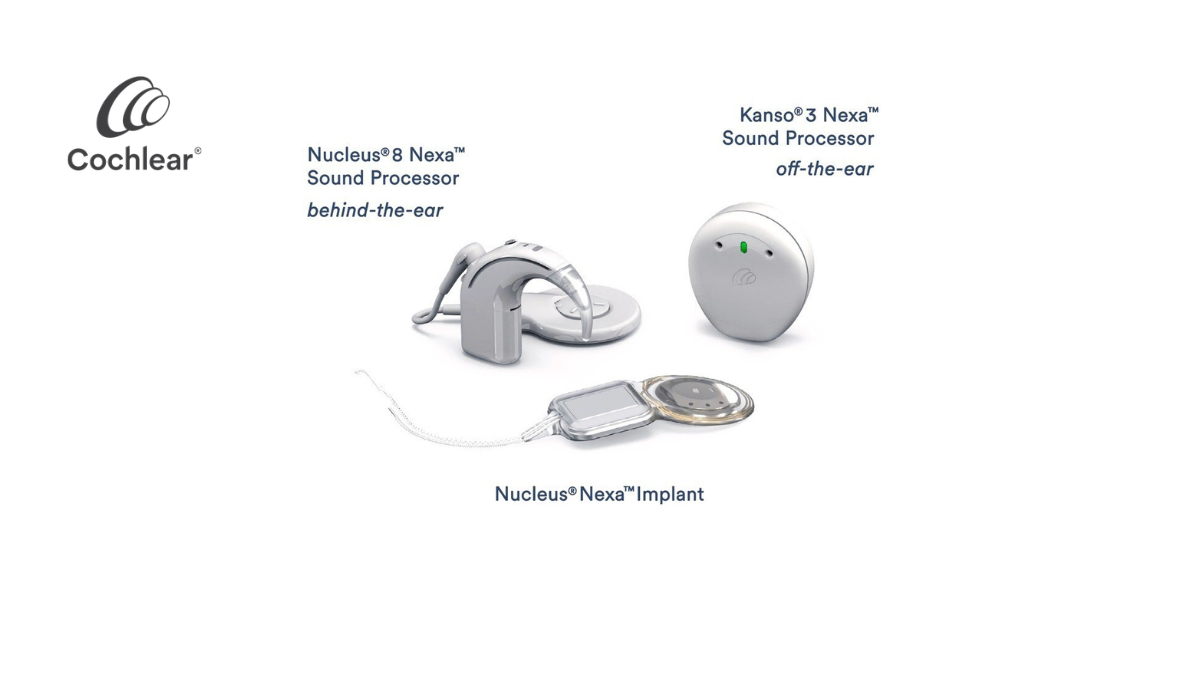
Launched on World Hearing Day 2026, the Cochlear™ Nucleus® Nexa® System introduces “Software-Defined Hearing” to India. Featuring the world’s first upgradeable internal firmware and built-in memory, this system represents a lifetime investment that grows smarter over time, future-proofing hearing for millions.
The launch of the Cochlear™ Nucleus® Nexa® System in India marks a historic shift from static medical hardware to an evolving digital platform. For decades, a cochlear implant was “locked” at the time of surgery; any technological leap required a new external processor or further surgery. The Nexa System, built on 20 years of R&D, shatters this limitation with upgradeable internal firmware. As Vandana Pisharody, Regional GM (South Asia & SE Asia), notes, this is a defining moment for India’s digital-first transformation. Much like a smartphone, the Nexa implant can be updated via software to access future AI-led sound processing without the need for additional surgery.
The scale of the need in India is immense: 63 million people suffer from significant auditory impairment, representing about 6.3% of the population. Furthermore, over one lakh babies are born annually with hearing deficiencies, with four in 1,000 suffering from severe loss. For these families, the Nexa’s on-board internal memory is a game-changer. The system features “Smart Sync,” which securely stores the user’s personalized hearing settings (MAPs) directly inside the implant. Jan Janssen, Chief Technology Officer at Cochlear, explains that if a user loses their sound processor, they no longer need a clinic visit for reprogramming. They simply pick up a “blank” replacement, and their settings are automatically copied from the implant in seconds.
Detailed Technical Specifications:
| Feature | Nucleus Nexa Internal Implant | Nucleus 8 Nexa Processor | Kanso 3 Nexa Processor |
| System Role | The “Smart” Surgical Component | Behind-the-Ear (BTE) Wearable | Off-the-Ear (OTE) Wearable |
| Smart Firsts | Upgradeable Firmware (First & Only) | Smallest & lightest in the world | Smallest rechargeable OTE |
| Memory | Built-in Onboard Storage | Automatic Profile Syncing | Automatic Profile Syncing |
| Sound Engine | New Advanced Chipset Platform | SmartSound iQ 2 with SCAN 2 | SmartSound iQ 2 with SCAN 2 |
| Connectivity | New RF Link & Gold Coil Tech | Bluetooth® LE Audio & Auracast™ | Bluetooth® LE Audio & Auracast™ |
| Power Mgmt | Dynamic Power Management | Optimized for 16+ hour battery | All-day rechargeable battery |
| Diagnostics | Onboard “Self-Check” performance | Real-time via Nucleus Smart App | Real-time via Nucleus Smart App |
| MRI Safety | 1.5T & 3.0T (No magnet removal) | N/A | N/A |
The Global Landscape & Competition
While the global cochlear market is led by the “Big Three”, Cochlear, MED-EL, and Advanced Bionics, the Nexa launch sets a new industry benchmark. Competitors like MED-EL have traditionally focused on MRI compatibility and flexible electrode arrays, while Advanced Bionics emphasizes high-resolution sound coding. However, by introducing software-defined hardware, Cochlear has moved the goalposts. Globally, the industry is racing toward AI-integrated processors, but Cochlear is currently the only player offering a system where the internal component is as updateable as the external one. This ensures that the 750,000+ people Cochlear has helped worldwide stay at the cutting edge of tech.
Trivia: Did you know the “Bionic Ear” was inspired by a seashell? In the 1970s, Professor Graeme Clark, the founder of Cochlear, was struggling to figure out how to insert a flexible electrode into the spiral-shaped cochlea. While on vacation, he experimented with a Turban shell and a blade of grass. He realized that if the electrode had the right flexibility, it would follow the spiral of the ear perfectly. This “Aha!” moment led to the first successful multi-channel implant in 1978.
UDHQ Take: At Unbox Daily HQ, we often see tech that claims to be “smart,” but the Nucleus Nexa System is smart in a way that truly changes the human experience. For an Indian parent, the real value here is freedom from obsolescence. Most gadgets we buy today are designed to be replaced in three years. By making the internal hardware updateable, Cochlear is giving families peace of mind that a one-time surgery is a lifetime investment.
The “Smart Sync” feature is a massive win for the “real world”, in a country as vast as India, a broken processor usually means a long trip to a major city clinic and days of silence. Now, it’s a 10-second fix at home. Furthermore, the inclusion of Auracast™ means users will eventually be able to stream crystal-clear audio at airports and concert venues directly to their heads. This isn’t just a medical device; it’s a future-ready passport to a connected life.
Source: Cochlear India | PR Newswire