
UNBOX DAILY HQ.: India’s First Launch Only Hub for Modern Lifestyle | 150+ New Launches Tracked Last Month Across India • 14 Categories • 1 Destination – UNBOX DAILY HQ.| EXPLORE BY CATEGORY: • BUSINESS & SERVICES | • CONSUMER DURABLES | • CONSUMER GOODS | • EDUCATION | • ENTERTAINMENT | • FINANCE | • LIFESTYLE | • HEALTH | • MOBILITY | • PUBLIC PULSE | • REAL ESTATE | • SPORTS | • TECHNOLOGY | • TRAVEL & HOSPITALITY | UNBOX DAILY HQ. – YOUR DAILY DOSE OF DISCOVERY! |
Vizag’s $175B Makeover: How India’s First ‘AI Data City’ is Ready to Byte the World

Navi Mumbai | editorial@unboxdailyhq.com
Andhra Pradesh is pivoting from being the “back office of the world” to the “AI Capital of the Globe.” With a staggering $175 billion in committed deals, Visakhapatnam (Vizag) is transforming into a dedicated AI Data City. Backed by a $15B Google AI Hub and an $11B Reliance-Brookfield data powerhouse, this coastal city is set to become the backbone of India’s sovereign compute future.
The Deep Dive: Vizag’s Gigawatt Revolution
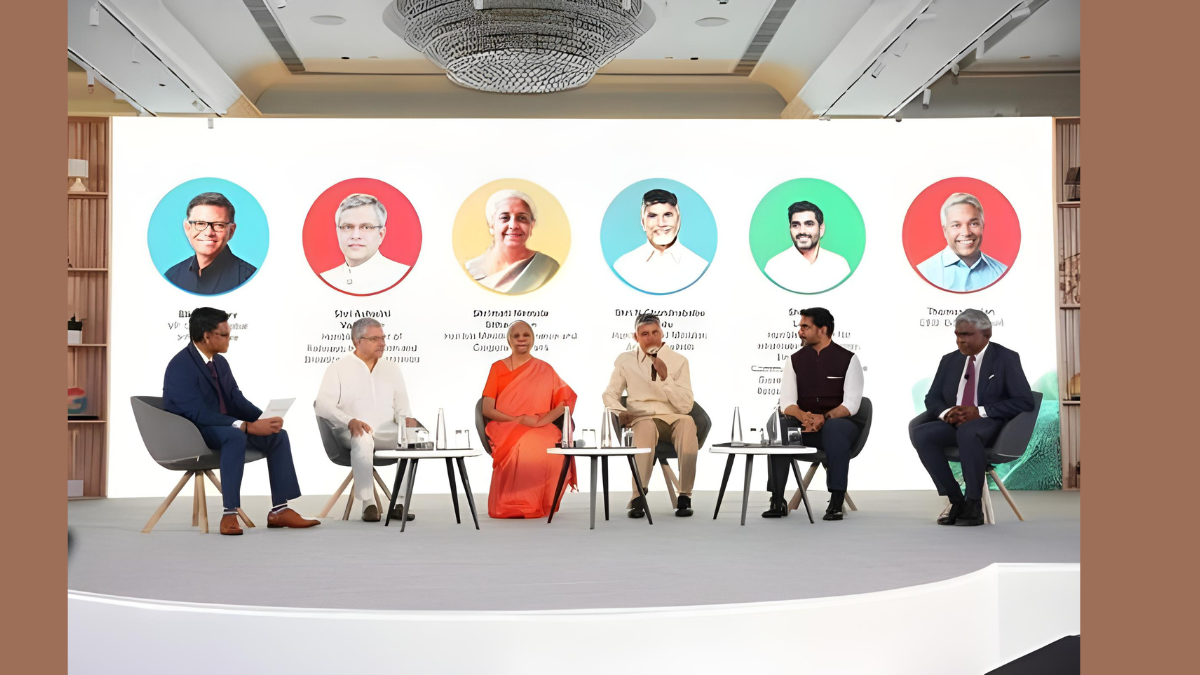
The “City of Destiny” has found a new purpose. IT Minister Nara Lokesh has officially unlocked the blueprint for the Vizag AI Data City, a 100-kilometer tech corridor designed to house the brains of the future. The scale is unprecedented: Google has committed $15 billion to build its largest AI infrastructure hub outside the United States. Not to be outdone, the Reliance-Brookfield JV is pouring $11 billion into a massive 1GW data center cluster.
How it stands against the competition:
While Mumbai and Chennai have traditionally led India’s data center market, Vizag is winning on “Sovereign Compute” capabilities. Unlike the crowded urban centers, Vizag offers direct subsea cable landings and dedicated renewable energy grids. This infrastructure allows AI models to train at a fraction of the cost compared to Singapore or Dubai, making it the most competitive “Data Port” in Asia.
The Global Impact:
On the world stage, Vizag is effectively breaking the monopoly of Western and East Asian data hubs. By establishing a 100-kilometer “Data City” radius, India is moving from being a consumer of AI to a global provider of “Compute-as-a-Service.” This massive 6GW capacity target places India alongside the US and China in the race for AI supremacy. As global companies seek “China Plus One” strategies for their digital assets, Vizag offers a democratic, high-speed, and cost-effective alternative that connects the Indo-Pacific like never before.
The Global Race: How World Leaders are Building the AI Future India isn’t alone in this gigawatt-scale sprint; the world’s most powerful economies are currently racing to build their own “AI Engines.” The United States continues to lead with a staggering $690 billion capex commitment for 2026 from hyperscalers like Microsoft and Alphabet, focusing on massive clusters like the $500 billion “Stargate” project. Meanwhile, Saudi Arabia is carving out its own future with Project Transcendence, a $100 billion state-led AI initiative under its Vision 2030, while China has integrated “City Brains” into its national strategy, launching 60 billion yuan funds to ensure its urban centers are AI-native by 2027. Singapore is also making moves with its $37 billion RIE plan, proving that whether you are a land-rich superpower or a coastal hub, owning the physical infrastructure of AI is now the ultimate symbol of 21st-century national strength.
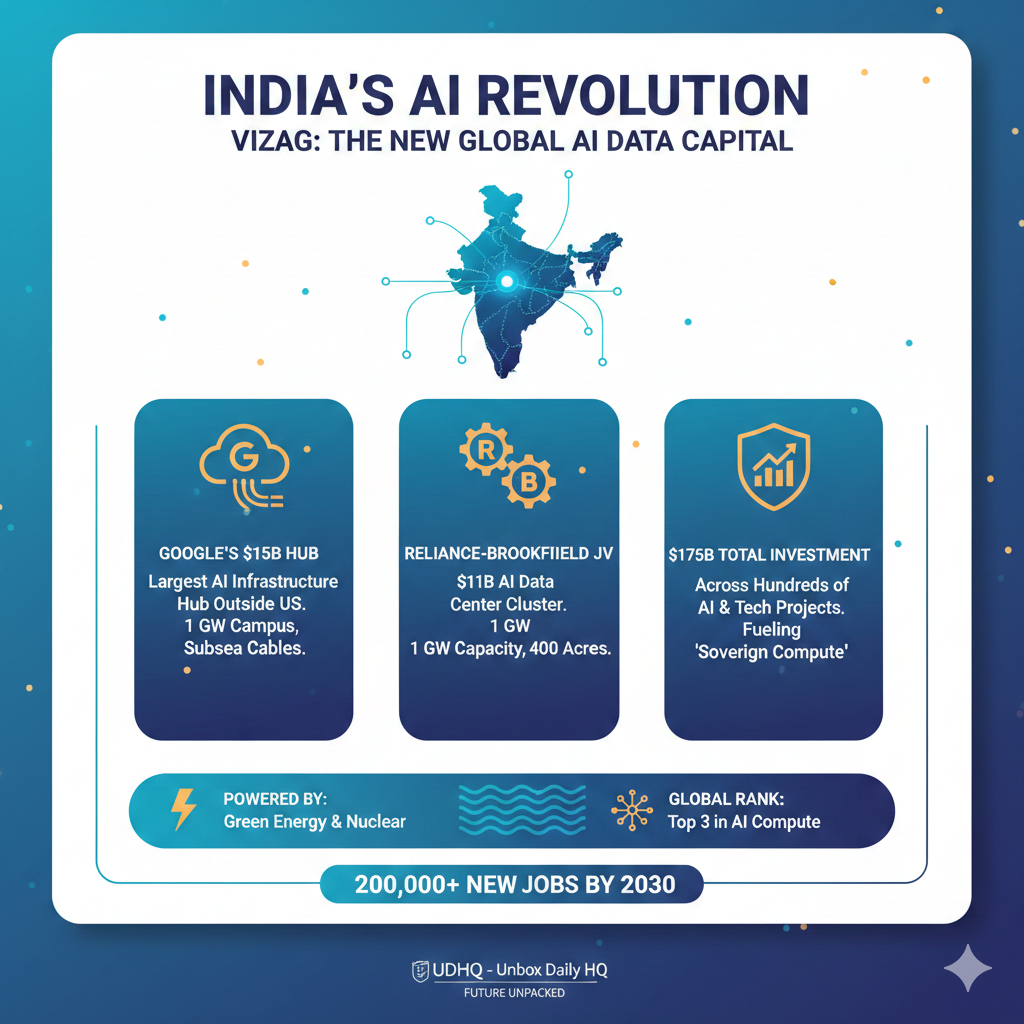
Trivia: Did you know that a single 1GW data center uses as much electricity as a medium-sized city? To power this, Andhra Pradesh is integrating the Kovvada Nuclear Power Project and massive solar parks to ensure Vizag stays “Green” while processing trillions of data points.
UDHQ Take: Why This Matters to Your Everyday Life
At Unbox Daily HQ (UDHQ), we track gadgets and tech, but this isn’t just about servers, it’s about your digital speed of life. When Google and Reliance invest billions into local data cities, the “Cloud” stops being a far-off concept in Virginia or Dublin and moves into your backyard. For the average Indian user, this means near-zero latency. Whether you are using real-time AI translation during a call, streaming high-res VR content, or using autonomous driving features, the “brain” of that tech is now sitting in Vizag.
This investment will democratize high-end computing. Imagine your phone being able to run complex generative AI tasks locally and instantly because the server is just a few hundred kilometers away. It’s the difference between a “laggy” experience and a seamless one. Vizag isn’t just building buildings; they are building the engine room for the next billion Indian internet users. This is the infrastructure that will finally make “AI for every Indian” a reality, not just a marketing slogan.
Source: PIB.GOV.