Thursday, May 28, 2026 |Navi Mumbai
--:-- | --°C | AQI --
If it's not on Unbox Daily HQ, it's not a Launch. Every product, policy and brand launch in India. One hub. What's new?
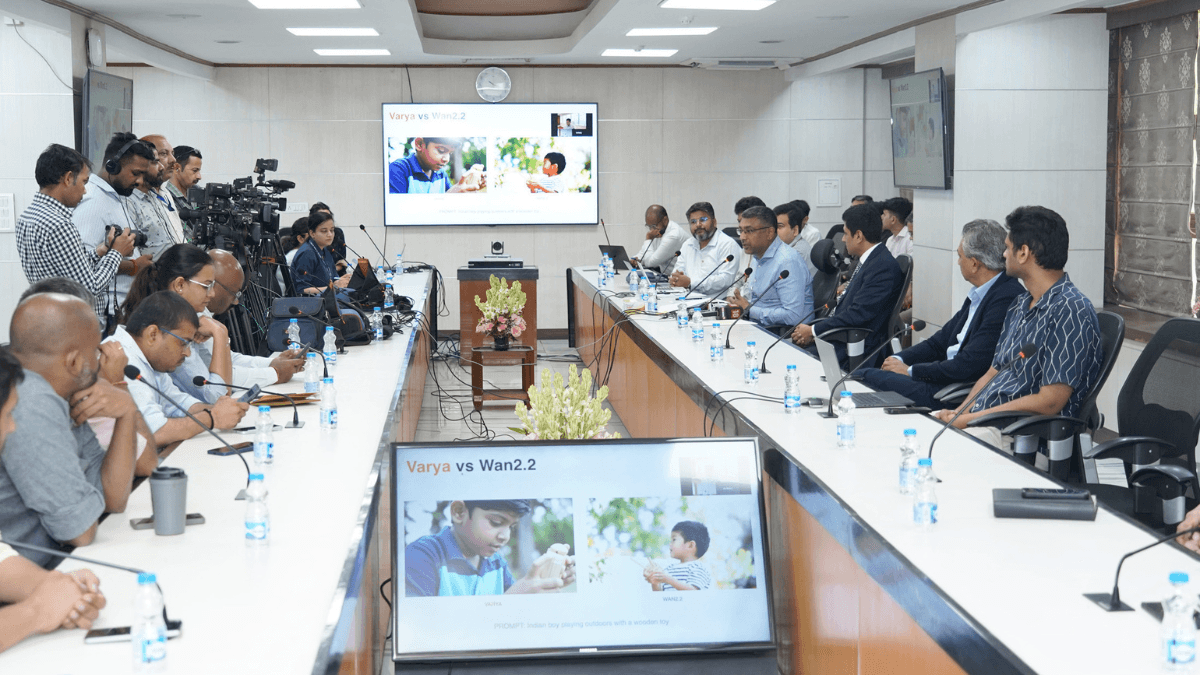
Varya uses a distillation technique to cut generation steps from 50 to 4 while understanding Indian cultural contexts.
The Essentials
The Pulse
Avataar has released Varya, a video generation model built in collaboration with the IndiaAI Mission to make text-to-video creation significantly cheaper. At an inference cost of just ₹0.48 per second, the tool provides a highly efficient alternative to global competitors, aiming to democratise video storytelling for creators, educators, and small businesses across the country.
If you are wondering how to generate culturally accurate Indian videos, Varya provides a direct solution by focusing on regional nuances rather than generic global visuals. The model understands and accurately renders local festivals, traditional clothing, street food, and community spaces that foreign models often misinterpret.
Instead of competing purely on model size, the developers focused entirely on reducing processing time and computational costs. Users begin their project by typing a simple idea or uploading a single starting image. The system then expands that input into a moving clip, allowing the overall narrative to build and evolve through continuous, smart prompting.
The Snapshot
ⓘ Sponsored: Unbox Daily HQ earns a commission if you buy through these links, at no extra cost to you. Prices shown are subject to change, and the actual price on Amazon at the time of purchase may vary from what is displayed here.
| Specifications | Details |
| Product | Varya |
| Developer | Avataar |
| Supported By | IndiaAI Mission |
| Core Function | Text and image to video generation |
| Efficiency Claim | 10x more cost-efficient than leading models |
| Processing Speed | Reduced from 50 steps to 4 steps |
| Operating Cost | ₹0.48 per second |
| India Availability | Available now |
The Big Picture
While global video generators compete on maximum visual fidelity regardless of compute expense, the local focus is shifting towards practical application and scale. With a market of 1.4 billion people, affordability is a prerequisite for Indian technology, not just a bonus feature. By ensuring the tool runs efficiently on subsidised national compute infrastructure rather than demanding massive processing power, Avataar changes the conversation from simply showcasing artificial capability to making these tools viable for daily business and educational operations across the country.
The India Prospective
For a local teacher or a small business owner in India, paying premium dollar subscriptions for foreign video generators is rarely sustainable. Varya solves this by pricing its output at ₹0.48 per second, making frequent video creation genuinely affordable. Because the model trains specifically on Indian cultural nuances, users avoid spending hours prompting foreign systems to accurately depict regional aesthetics.
The Inside Intel
The significant cost savings come from a machine learning method called model compression. Most standard video generators iterate through over 50 noisy processing steps before producing a clean clip. Varya functions as a compact student model that learned to replicate a larger teacher model, allowing it to skip redundant computations and deliver comparable visual quality in just four steps.
The Unboxed Truth
Unbox Daily HQ views this as a necessary shift from expensive tech demonstrations to usable daily tools. If you run a small business, teach online, or manage social media for local brands, this is worth testing immediately. The ₹0.48 per second pricing means you can experiment with multiple concepts without burning through a heavy monthly subscription fee. The true value lies in its built-in understanding of Indian visual context, saving you from writing exhaustive descriptive prompts just to make a scene look authentically local.
Best for: Independent creators and small business owners who need frequent promotional or educational videos on a tight budget
Who Is This For: Perfect for 25 to 45-year-old educators, digital marketers, and MSME owners in India who require affordable, culturally accurate video content
The Checkout
The Source
Avataar India | PIB.GOV.
Varya costs ₹0.48 per second of video generated, making it up to ten times more cost-efficient than leading global models. The tool is available now in India for creators, educators, and small businesses. It was developed with support from the IndiaAI Mission to provide affordable video creation at population scale.
Unlike global models that often misinterpret local context, Varya is built specifically to understand and accurately render Indian festivals, clothing, food, and public spaces. It also uses a distillation technique that cuts video generation from 50 steps to four, reducing processing time and computational costs. This allows the system to deliver high visual quality while remaining dramatically more efficient.
Yes, Varya is worth using for Indian MSME owners, digital marketers, and educators who require frequent, culturally accurate video content. The price of ₹0.48 per second allows users to test multiple promotional or educational concepts without paying heavy subscription fees. Its built-in understanding of regional aesthetics also saves creators from writing exhaustive descriptions just to make scenes look authentically local.