Thursday, May 28, 2026 |Navi Mumbai
--:-- | --°C | AQI --
If it's not on Unbox Daily HQ, it's not a Launch. Every product, policy and brand launch in India. One hub. What's new?
The Mahindra high-speed electric vehicle network scales across major Indian highway corridors.
The Takeaway
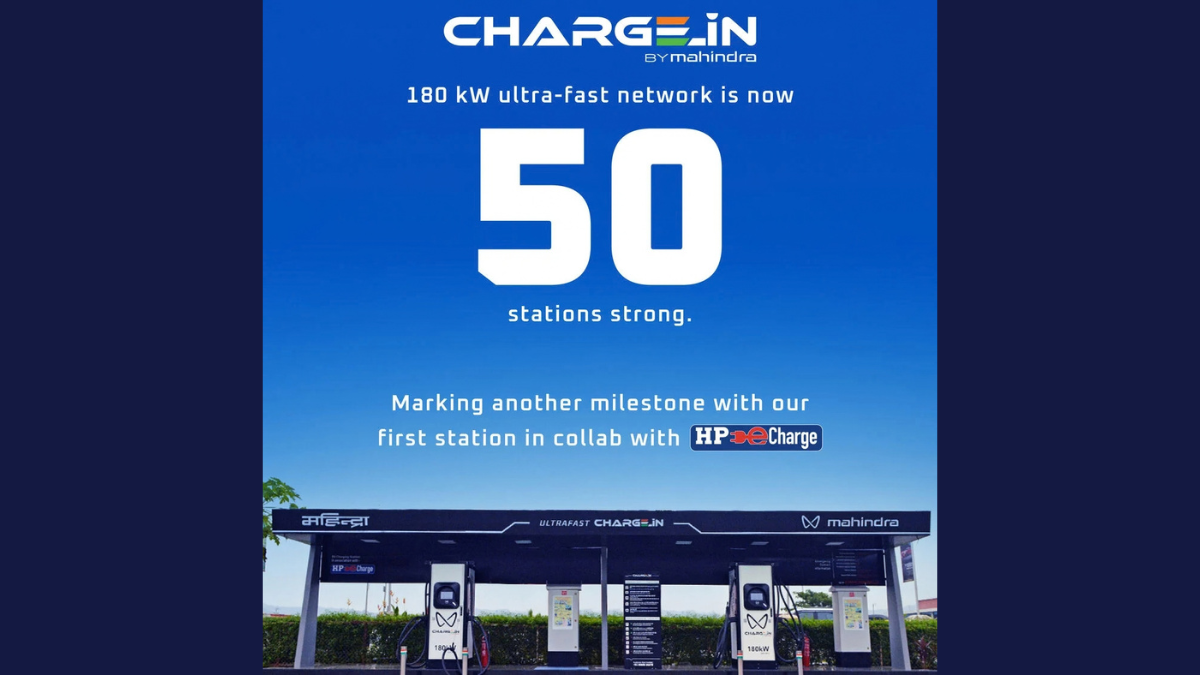
Charge_iN by Mahindra expands its ultrafast electric vehicle charging infrastructure to 50 live sites. The newest location sits directly on the Mumbai-Pune Expressway at the HP Auto Care Centre in Sajgaon. This marks the first active deployment stemming from a broader strategic agreement with Hindustan Petroleum Corporation Limited. The corporate roadmap aims for 250 stations by December 2027.
Purchasing an electric vehicle is often the easiest step. Battery finance drops BE 6 SPORTEQ entry cost to Rs 11.45 lakh. The dual-loan structure extends across the entire flagship electric lineup to lower upfront financial barriers. Keeping those vehicles running requires premium highway infrastructure. You can initiate charging sessions through the native Charge_iN application or the Me4U platform.
Marketing materials sell a 20-minute charging window from 20 to 80 percent. Real-world physics severely complicate this showroom pitch. The brand frames this as a dependable solution for everyone. Whether that holds up in daily use is a separate question entirely. That 20-minute metric relies heavily on standard test conditions and a single vehicle drawing maximum current. A second car plugging into the same unit instantly triggers dynamic load sharing. The power splits between the two vehicles immediately. Your quick highway pitstop extends significantly as the delivery curve drops. Anyone who has watched automakers sell charging speeds knows the headline figure rarely survives a busy holiday weekend.
Vital statistics for the Charge_iN by Mahindra rollout
| Specification | Confirmed Detail |
| Charger Capacity | 180 kW DC |
| Connector Type | Dual-gun CCS2 |
| Current Footprint | 200 points at 50 stations |
| Network Access | Open to all e4W brands |
A reported pricing tier around Rs 26 per kWh places this at the premium end of the spectrum. Standard highway chargers from operators like Tata Power EZ Charge usually hover between Rs 18 to 22 per kWh. Unless you drive an EV with an advanced 800V architecture capable of accepting high inputs, you are paying for speeds your battery physically cannot utilise. Mass-market electric vehicles simply bottleneck the electrical flow.
ⓘ Sponsored: Unbox Daily HQ earns a commission if you buy through these links, at no extra cost to you. Prices shown are subject to change, and the actual price on Amazon at the time of purchase may vary from what is displayed here.
Indian highway charging also involves intense heat and crowded real estate. Summer temperatures force both the charging cabinet and your vehicle battery management system to throttle power aggressively to prevent overheating. That peak 180 kW speed often manifests as a brief burst rather than a sustained delivery.
Co-locating chargers with HPCL fuel pumps provides excellent geographic reach. Real owners know these shared spaces frequently suffer from petrol cars blocking EV slots. Localised grid fluctuations also knock high-capacity units offline completely. Actual network access depends entirely on the physical gate hours of the local fuel pump. The mathematics behind the network expansion reveal a massive upcoming scramble. Mahindra has completed exactly 20 percent of its station target so far. Delivering the remaining 80 percent requires a drastic construction acceleration over the next 15 months.
The Unboxed Truth
We built the entire editorial standard at Unbox Daily HQ to look past corporate press statements. Charge_iN by Mahindra belongs in your life only if you own a high-voltage electric vehicle capable of accepting premium charging speeds. You should download the app for the advance slot reservation feature alone. Paying a steep premium makes zero financial sense if your mass-market car caps out at lower speeds. Use standard fast chargers for everyday highway runs. Keep this network saved on your phone as a reliable backup for extreme emergencies.
Best for: Premium electric vehicle owners aged 25 to 50 navigating major inter-city corridors.
Courtesy: Charge_iN by Mahindra
Charge_iN by Mahindra currently operates 200 charging points across 50 live stations in India. These 180 kW dual-gun units are located along key highway corridors, including the Mumbai-Pune Expressway at Sajgaon. The open network serves electric four-wheelers from all manufacturers across major inter-city travel routes.
Charge_iN by Mahindra exclusively deploys 180 kW dual-gun hardware rather than standard chargers operated by networks like Tata Power EZ Charge. These high-power dispensers split electrical output between two connected vehicles through dynamic load sharing. Cars without advanced high-voltage architecture cannot utilise these peak speeds during highway journeys.
Charge_iN by Mahindra is only worth using for owners of premium high-voltage electric vehicles who regularly navigate major highway corridors. Drivers of mass-market electric cars should stick to standard fast chargers because their batteries cannot draw these speeds. Reserve this network on your smartphone primarily as an emergency backup or to book slots in advance.