Thursday, May 28, 2026 |Navi Mumbai
--:-- | --°C | AQI --
If it's not on Unbox Daily HQ, it's not a Launch. Every product, policy and brand launch in India. One hub. What's new?
These modernised branches integrate UPI, logistics, and doorstep banking under a ₹5,785 crore national tech overhaul.
The Essentials
The Pulse
The Department of Posts is undergoing its most significant operational shift in 170 years, migrating to a corporate governance model. Under the ₹5,785 crore IT 2.0 programme, the network is shifting to cloud-based platforms and real-time data management.
This transition deliberately targets the growing Indian e-commerce market, establishing partnerships with ONDC, Amazon, Flipkart, and international providers like DHL. Does this mean the end of the traditional postmaster? Instead of replacing frontline workers, the system empowers Gramin Dak Sevaks to act as digital ambassadors, equipped for structured sales and financial planning.
The structural changes are yielding immediate financial results for the institution. In the first quarter of FY 2026–27, India Post recorded a 22 per cent year-on-year growth, surpassing ₹4,000 crore in revenue. The Andhra Pradesh circle emerged as the nation’s top performer, achieving 102 per cent of its business target while delivering crucial state welfare payments through its unmatched last-mile network.
The Breakdown
ⓘ Sponsored: Unbox Daily HQ earns a commission if you buy through these links, at no extra cost to you. Prices shown are subject to change, and the actual price on Amazon at the time of purchase may vary from what is displayed here.
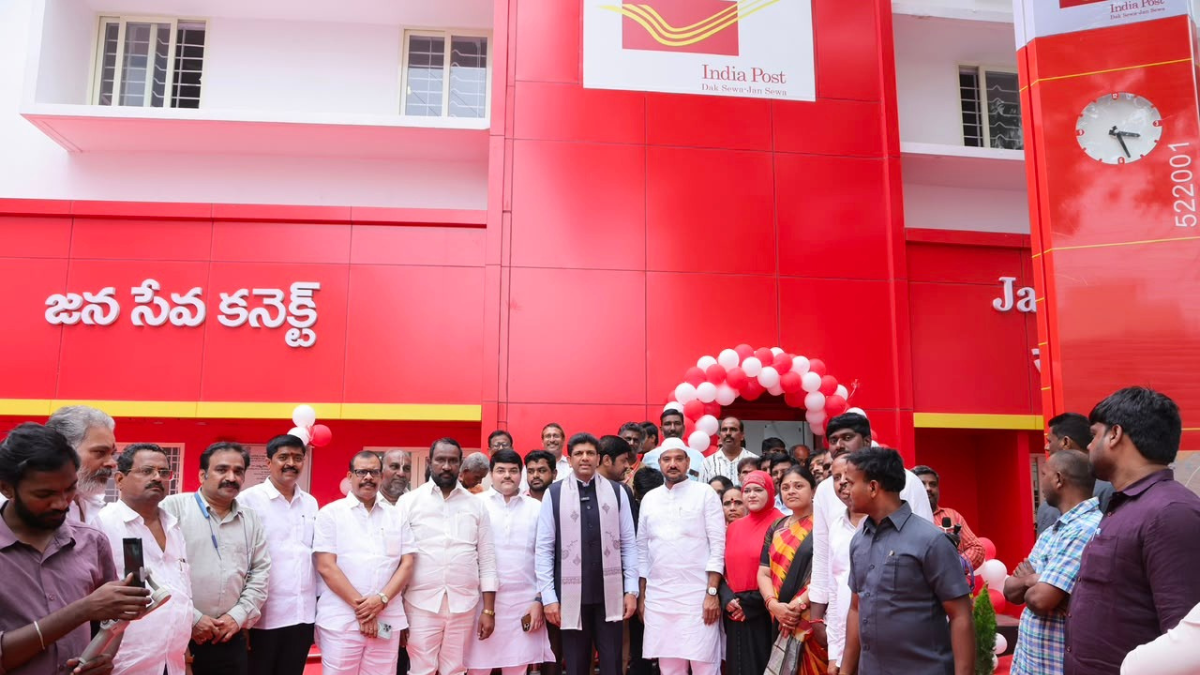
The physical and digital infrastructure undergoes a complete overhaul here. The Kothapeta Sub-Post Office, renovated at ₹51.81 lakh, integrates a red feature wall reflecting the 1975 Kuchipudi commemorative stamp. The Chandramouli Nagar branch, upgraded for ₹64.13 lakh, adopts architectural cues from the Ananda Nilayam tower. Operationally, the backend supports 24-to-48-hour delivery standards using OTP-based confirmation and SMS tracking. The system integrates API connections for bulk logistics discounts, Buy Now Pay Later facilities, and specific packaging solutions. Service counters are now equipped to process UPI payments, Aadhaar updates, and direct benefit transfers, pushing over 60 per cent of postal transactions into digital formats rather than cash.
The Distinction
The primary differentiator of the Jan Seva Connect post office is the functional convergence of a corporate logistics hub with a last-mile welfare delivery network. Competing private couriers focus strictly on parcel logistics, while regional government offices handle singular civic duties. This model introduces enterprise-grade architecture, such as geotagged tracking, Buy Now Pay Later facilities, and OTP confirmations into a public space that concurrently processes Sukanya Samriddhi Yojana accounts and Aadhaar updates. It physically bridges global e-commerce supply chains with rural financial inclusion in a way no private or public entity currently replicates.
The Snapshot
| Specification | Detail |
| Project | Jan Seva Connect |
| Locations | Kothapeta and Chandramouli Nagar, Guntur |
| National Investment | ₹5,785 crore |
| Kothapeta Renovation | ₹51.81 lakh |
| Chandramouli Nagar Renovation | ₹64.13 lakh |
| Delivery Standard | 24 to 48 hours |
| Key Services | Logistics, UPI, Passport Seva, Savings Schemes |
The Big Picture
Blue Dart and Delhivery have dominated the tech-enabled logistics sector in India, while regional banks managed rural financial inclusion. India Post previously operated as a fragmented alternative in both sectors. This corporate restructure directly challenges private logistics firms by utilising an existing network of 1.65 lakh branches. By appointing a Chief Technology Officer and integrating with the Open Network for Digital Commerce, the postal service shifts from a subsidised public utility to a competitive enterprise capable of matching private sector delivery metrics.
The India Prospective
For working professionals in tier-two cities like Guntur, this overhaul eliminates the need to visit separate regional offices for passports, biometric updates, and shipping. The integration of UPI and standard 48-hour delivery means local entrepreneurs can use the neighbourhood post office as a reliable e-commerce fulfillment centre, bypassing the higher minimum-volume thresholds often required by private couriers for discounted shipping.
The Inside Intel
The architectural redesign of the new Guntur branches was not delegated to standard civil contractors but guided directly by the School of Planning and Architecture. This academic partnership ensures local cultural identity, such as Kothapeta’s 1975 Kuchipudi stamp motif and Chandramouli Nagar’s Ananda Nilayam tower inspiration, remains physically central to the modernised infrastructure even as backend operations shift entirely to cloud-based artificial intelligence.
The Unboxed Truth
Unbox Daily HQ considers this administrative overhaul a mandatory leap for Indian logistics, transforming a sluggish utility into a genuinely competitive asset. This network is specifically for a 34-year-old regional seller on ONDC or a rural resident who previously lost entire workdays navigating municipal bureaucracy. At standard government postal rates, accessing 48-hour geotagged delivery and enterprise-level logistics provides undeniable economic value, matching the capabilities of premium private couriers for a fraction of the shipping cost. The single factor that makes this modernisation worth a citizen’s time is the true convergence of services. Completing an Aadhaar update, opening a Sukanya Samriddhi account, and dispatching commercial parcels under one roof fundamentally respects the user’s time. This is the most comprehensive and effective public service infrastructure deployment in the country right now.
Best for: Regional business owners and rural residents who need integrated banking, civic updates, and reliable logistics
Who Is This For: Perfect for 22 to 55-year-old local entrepreneurs in tier-two and tier-three cities who require enterprise-grade shipping and financial services in a single location
The Checkout
The Source
Ministry of Communications
The Query
The modernisation of the two Guntur sub-post offices under the Jan Seva Connect initiative cost ₹115.94 lakh in total. Renovation for the Kothapeta branch cost ₹51.81 lakh, while the Chandramouli Nagar branch required ₹64.13 lakh. This forms part of India Post’s nationwide ₹5,785-crore digital transformation programme.
Jan Seva Connect post offices combine enterprise-grade logistics like 48-hour geotagged delivery and Buy Now Pay Later with public services like Aadhaar updates and banking under one roof. Private couriers like Blue Dart and Delhivery focus strictly on commercial parcel transport. This integrated model provides last-mile civic and financial utility alongside commercial shipping.
Jan Seva Connect post offices are best for local entrepreneurs, ONDC sellers, and residents in tier-two cities needing reliable logistics and official civic services in one location. At standard government rates, users gain access to 48-hour geotagged shipping, passport services, and UPI payments. It saves substantial time by consolidating administrative and dispatch tasks.