Thursday, May 28, 2026 |Navi Mumbai
--:-- | --°C | AQI --
If it's not on Unbox Daily HQ, it's not a Launch. Every product, policy and brand launch in India. One hub. What's new?
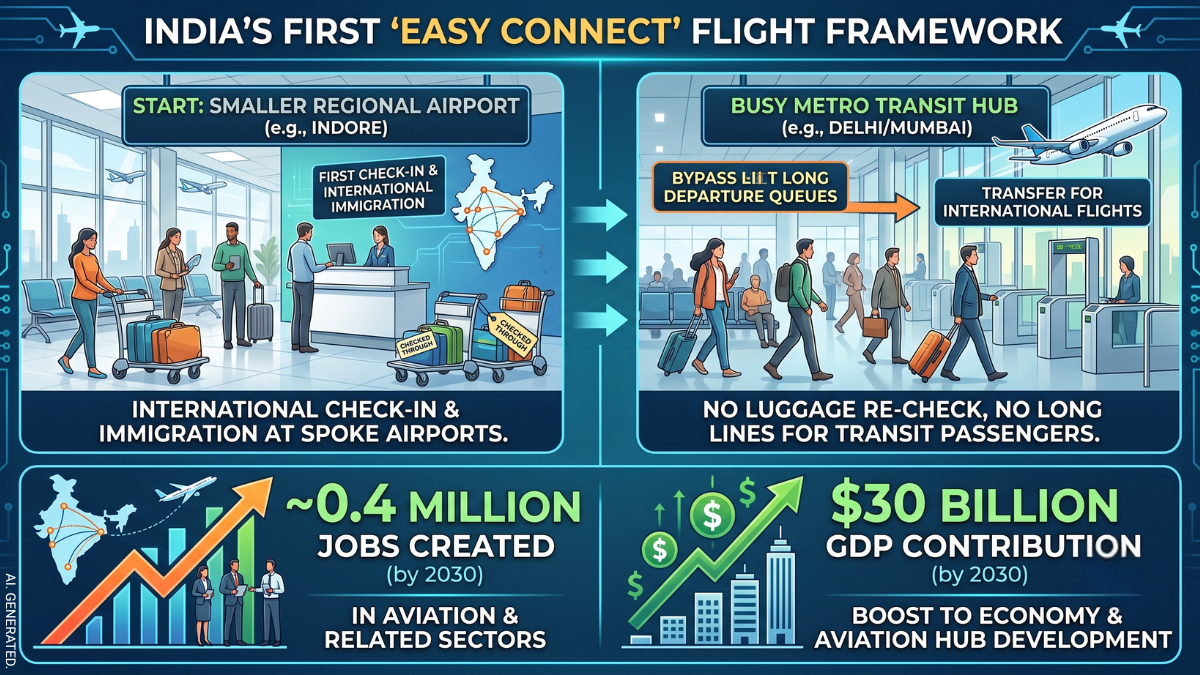
The hub-and-spoke model lets passengers from regional airports finish international formalities before connecting in Delhi.
The Essentials
The Pulse
International passengers departing from Varanasi can now complete their immigration and customs checks before they even board their connecting flight to Delhi. The Ministry of Civil Aviation has initiated a hub-and-spoke model designed to make Tier-II and Tier-III cities the actual starting point for global travel. By moving departure formalities to the regional spoke airport, the system aims to clear the bottleneck typically found at major hubs.
Airlines issue separate physical boarding cards with distinct ‘D’ (domestic) and ‘I’ (international) identifiers to ensure international flyers do not mix with domestic passengers on the connecting leg. Both legs of these specific flights operate entirely under international protocols. Travellers under this framework do not have access to customs declaration facilities once they reach the hub airport.
The strategy shifts the administrative burden away from congested transit points. If successful, this framework will expand to other regional airports, fundamentally changing how Indians outside major metros navigate overseas travel.
The Snapshot
ⓘ Sponsored: Unbox Daily HQ earns a commission if you buy through these links, at no extra cost to you. Prices shown are subject to change, and the actual price on Amazon at the time of purchase may vary from what is displayed here.
| Specification | Details |
| Initiative | ‘Easy Connect’ Flight Operations |
| Framework | Hub-and-Spoke Model |
| Inaugural Spoke Airport | Lal Bahadur Shastri International Airport, Varanasi |
| Designated Hub Example | Delhi |
| Key Carrier | Air India |
| Boarding Identifiers | ‘D’ (Domestic) and ‘I’ (International) |
| Projected 2030 Impact | 0.4 million jobs, $30 billion GDP addition |
The Big Picture
Major Middle Eastern and Southeast Asian hubs like Dubai and Singapore have historically acted as the primary transit points for Indian international flyers. The Ministry of Civil Aviation is actively trying to retain that transit traffic within Indian borders. By allowing airlines like Air India to consolidate regional passengers at domestic hubs such as Delhi without requiring secondary immigration checks, the government is building the infrastructure necessary to compete with foreign aviation hubs. This structural shift is essential for India to establish its own global transit dominance by the 2047 target.
The India Prospective
For professionals whose families live in Tier-II cities, this removes the most stressful part of international travel: navigating Delhi or Mumbai airports. Elderly travellers or first-time international flyers can now handle their paperwork in familiar, less crowded regional terminals. The system relies entirely on existing Indian airport infrastructure, meaning the benefits of quicker transit times are immediately available without waiting for new terminal constructions to finish.
The Inside Intel
Because the domestic leg of the journey is officially designated as an international operation, passengers under this framework are entirely restricted from using customs declaration facilities at the connecting hub. All declarations must be finalised at the starting regional airport, meaning travellers cannot make late declarations or adjust paperwork once they land in Delhi for their onward connection.
The Unboxed Truth
Unbox Daily HQ considers this a massive quality-of-life upgrade for non-metro flyers heading overseas. Bypassing the immigration queues at Delhi makes the overall transit time substantially shorter and far less exhausting. The value here is purely in time and energy saved, as the structural convenience significantly outweighs any minor boarding pass adjustments required by the airlines. By moving the administrative friction to smaller, quieter airports, the government has solved one of the biggest headaches of outbound Indian travel. This is the most practical aviation update for regional travellers this year.
Best for: Frequent international flyers originating from regional cities who want to minimise transit times at major metros.
Who Is This For: Perfect for 28 to 60-year-old professionals and their families in Tier-II cities who value straightforward, low-stress airport experiences over extended layovers.
The Checkout
The Source
Ministry of Civil Aviation | PIB.GOV
The Query
‘Easy Connect’ flight operations are currently available at Lal Bahadur Shastri International Airport in Varanasi with connections through Delhi. The Ministry of Civil Aviation plans to extend this hub-and-spoke model to other Tier-II and Tier-III city airports across India. Air India operates the inaugural flight.
‘Easy Connect’ flights allow international travellers from regional Indian cities to complete all immigration and customs formalities at their local airport rather than during transit. This shifts the administrative process away from congested international hubs like Dubai or Singapore. Passengers receive separate domestic and international boarding cards to prevent passenger intermixing.
The ‘Easy Connect’ framework is highly valuable for frequent international flyers originating from Tier-II cities because it eliminates immigration queues at major metro hubs. The time and energy saved make it an essential choice for professionals aged 28 to 60. It offers significant practical value by removing transit anxiety during outbound journeys.