Thursday, May 28, 2026 |Navi Mumbai
--:-- | --°C | AQI --
If it's not on Unbox Daily HQ, it's not a Launch. Every product, policy and brand launch in India. One hub. What's new?
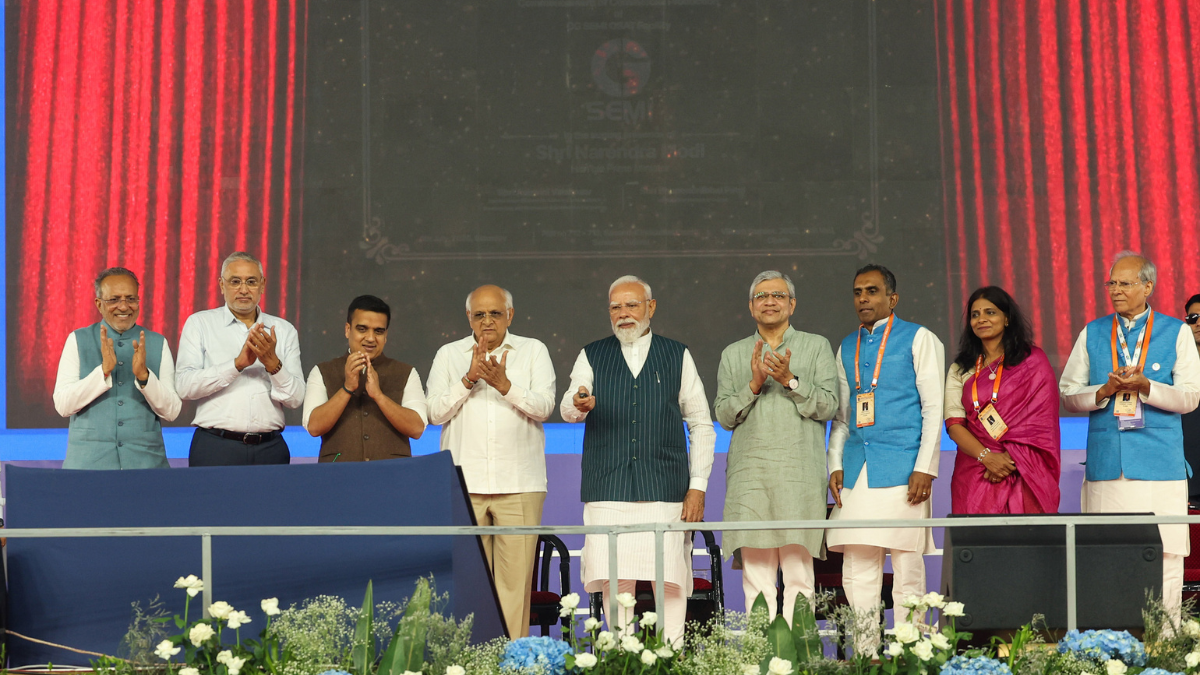
The CG Semi plant in Gujarat aims to package up to 500 crore chips annually with Japanese and Thai partnerships.
The Essentials
The Pulse
The newly opened CG Semi Outsourced Semiconductor Assembly and Test facility in Gujarat is now officially packaging commercial microchips. This development marks a definitive shift in the domestic manufacturing strategy, moving beyond simply assembling imported electronic parts to creating the foundational components that actually power them.
The facility currently outputs 20 crore units a year, but the operational target is set significantly higher at 500 crore units annually. This expansion is supported by an active cross-border partnership involving Japanese and Thai industry players, bringing international technical expertise directly into the domestic manufacturing cluster.
You might wonder why chip packaging matters when full fabrication gets more attention. Without localised testing and assembly, even domestically fabricated chips would need to be shipped abroad before they could be used in final products. Establishing this facility alongside others like Micron and Kaynes lays the groundwork for a complete technological network.
The long-term objective is to supply fully domestic chips for the rapidly growing artificial intelligence and robotics sectors. This integrated approach ensures the domestic electronics industry is less reliant on foreign components over the next decade.
ⓘ Sponsored: Unbox Daily HQ earns a commission if you buy through these links, at no extra cost to you. Prices shown are subject to change, and the actual price on Amazon at the time of purchase may vary from what is displayed here.
The Snapshot
| Feature | Detail |
| Facility | CG Semi OSAT |
| Location | Sanand, Gujarat |
| Current Capacity | 20 crore units annually |
| Target Capacity | 500 crore units annually |
| Partnerships | Japanese and Thai industry partners |
| Broader Programme | Semicon India |
The Big Picture
Over the past decade, domestic electronics production surged nearly seven times compared to 2014 levels, while overall exports expanded eleven-fold. Much of this initial growth relied on mobile phone assembly, turning the country into the second-largest producer and exporter in that specific sector. Now, the strategy is shifting up the value chain to secure supply lines against global shortages. Establishing semiconductor clusters in regions like Sanand, populated by firms such as CG Semi, Micron, and Kaynes, is the necessary progression to ensure future self-reliance.
The India Prospective
For the Indian consumer, localised semiconductor packaging eventually means less vulnerability to global supply chain disruptions that frequently delay electronics deliveries and drive-up prices. Furthermore, this specific Sanand facility is actively employing young women from tribal communities who received advanced technical training in Malaysia. This indicates a shift where high-tech manufacturing creates direct, high-skilled employment opportunities outside traditional urban IT hubs.
The Inside Intel
The workforce at this highly technical Sanand facility includes young women from tribal communities who transitioned directly from basic ITI studies to executing modern semiconductor manufacturing processes. Before taking their positions on the production floor to handle these components, they travelled out of their home regions for the very first time to receive specialised technical training at facilities in Malaysia.
The Unboxed Truth
Unbox Daily HQ considers this expansion a necessary structural shift for the national technology sector. While a semiconductor packaging plant does not offer a direct consumer product to purchase today, it fundamentally alters how quickly and affordably hardware companies can build devices locally in the future. The ability to test and package chips domestically removes a major bottleneck in the electronics supply chain. Keep an eye on how these local components integrate into upcoming domestic hardware brands over the next two years.
Best for: Technology strategists and hardware manufacturers who require localised supply chains to scale their operations
Who Is This For: Perfect for 28 to 55 industry professionals in the electronics sector who track domestic infrastructure developments
The Checkout
The Source
Prime Minister’s Office | PIB.GOV
The Query
Yes, the CG Semi OSAT facility is officially operational in Sanand, Gujarat, having commenced commercial chip packaging. The plant currently holds an active production capacity of 20 crore units annually. It operates under the nationwide Semicon India programme to secure the domestic hardware supply chain.
The CG Semi OSAT facility shifts focus from merely assembling imported electronic parts to packaging the foundational microchips locally. This facility establishes localised testing and assembly within the Sanand cluster alongside firms like Micron and Kaynes. This structural shift ensures that domestic hardware manufacturers avoid shipping fabricated chips abroad for final processing.
The CG Semi OSAT facility is best for technology strategists and hardware manufacturers who require localised supply chains to scale operations. While it does not sell a direct consumer product, it adds value by removing a major manufacturing bottleneck. This step fundamentally alters how quickly and affordably companies can build devices locally.