Thursday, May 28, 2026 |Navi Mumbai
--:-- | --°C | AQI --
If it's not on Unbox Daily HQ, it's not a Launch. Every product, policy and brand launch in India. One hub. What's new?
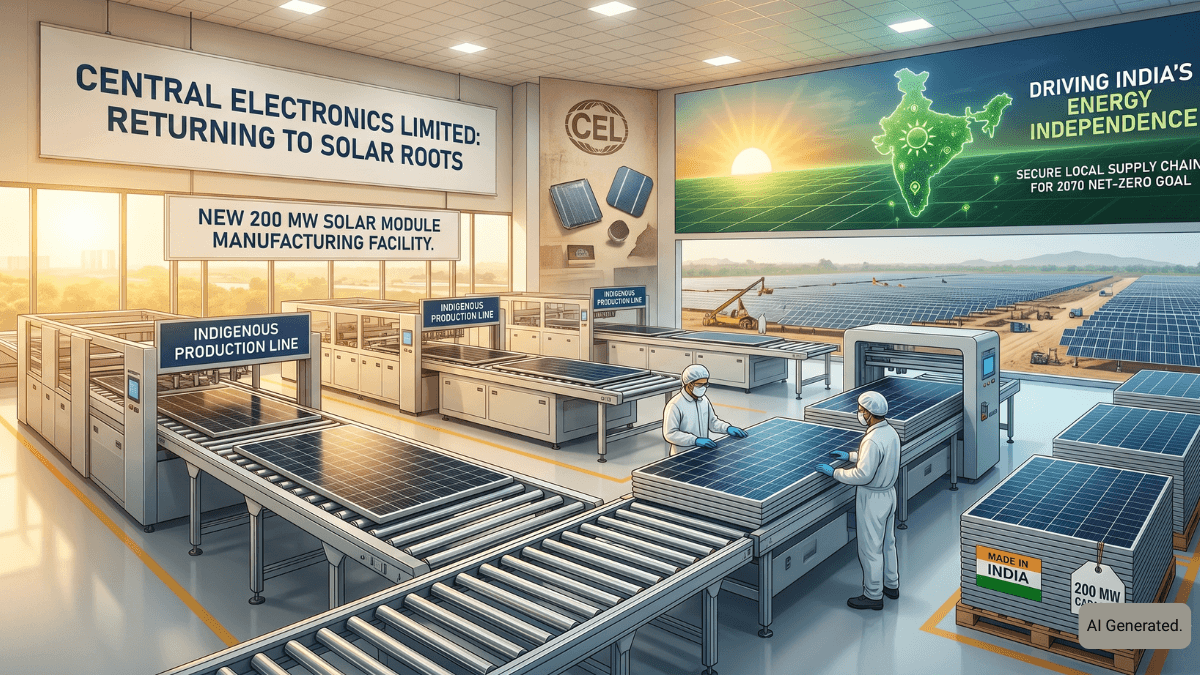
Central Electronics Limited returns to its solar roots with a new 200 MW module manufacturing facility.
The Essentials
The Pulse
Central Electronics Limited is doubling down on its legacy by opening a 200 MW solar module manufacturing line. This is a significant turnaround for a company that was nearly sold off a few years ago. Now, it is a profit-making Mini Ratna contributing directly to the country’s energy security and strategic technology sectors.
The speed of execution is the real story here. The Request for Proposal for the project was issued on 24 April 2025, and the manufacturing facility was operational in less than a year. It shows a level of efficiency and operational discipline that proves public sector units can keep pace with national demands when properly managed.
Beyond solar panels, the site is becoming a hub for strategic tech. We are seeing collaborations for automated weather systems and defence electronics. It is less about one specific product for your home and more about a state-owned firm finding its feet to support India’s larger green energy trajectory.
The Snapshot
ⓘ Sponsored: Unbox Daily HQ earns a commission if you buy through these links, at no extra cost to you. Prices shown are subject to change, and the actual price on Amazon at the time of purchase may vary from what is displayed here.
| Feature | Details |
| Manufacturer | Central Electronics Limited (CEL) |
| Capacity | 200 MW |
| Core Product | Solar Modules |
| Status | Operational |
| Established | April 2025 (RFP issued) |
| Collaborators | CSIR-NAL, CSIR Laboratories |
| Strategic Focus | Renewable Energy and Defence Electronics |
The Big Picture
India is racing to meet its 2070 net-zero targets, and domestic manufacturing is the only way to avoid heavy import reliance. While private giants like Adani Green Energy dominate the headlines, the revival of a legacy PSU like CEL adds much-needed diversity to the sector. By manufacturing modules locally, India reduces its vulnerability to global supply chain shocks. This isn’t just about clean energy; it is about building a strategic technology base that includes everything from wind turbines to electronic warfare systems.
The India Prospective
For a professional in Bengaluru or Mumbai, this signals a more stable national grid powered by indigenous technology. While you might not be buying these modules for a personal balcony project just yet, the increase in domestic production helps lower the overall cost of solar energy across the country. It also strengthens the “Make in India” initiative in sectors that were previously reliant on imported components, ensuring that India’s green transition is built on local ground.
The Inside Intel
CEL actually manufactured India’s very first solar cell back in 1977 and built the country’s first solar plant in 1979. For decades, this pioneering work went largely unrecognised as the company struggled with the threat of disinvestment. This new manufacturing line is essentially a “homecoming” for the brand that started India’s solar journey nearly half a century ago.
The Unboxed Truth
Unbox Daily HQ. suggests tracking CEL as it pivots from a struggling entity to a strategic powerhouse. While this is a B2B and government-focused manufacturing boost, its success dictates how quickly solar adoption can scale nationwide without relying on foreign imports. It proves that state-run innovation can still deliver when given clear policy support and autonomy. This is a win for national self-reliance.
Best for: Policy observers and energy professionals who want to see how India secures its green future.
Who Is This For: Perfect for 28 to 55 professionals in the energy and tech sectors who value indigenous manufacturing and national strategic growth.
The Checkout
The Source
Ministry of Science & Technology | PIB.GOV.
Yes, the manufacturing facility is already operational and was completed in less than one year. It is located in India and focuses on the indigenous production of solar modules to support national energy goals.
While private firms like Adani Green Energy are major industry players, CEL is a revived state-owned Mini Ratna focusing on indigenous innovation. This new line adds 200 MW of domestic capacity specifically to reduce the country’s reliance on imported solar components.
This domestic manufacturing capacity is essential for achieving the national target of net-zero emissions by 2070. By producing solar modules locally, CEL strengthens the country’s strategic self-reliance and secures the supply chain for large-scale renewable energy projects.