Thursday, May 28, 2026 |Navi Mumbai
--:-- | --°C | AQI --
If it's not on Unbox Daily HQ, it's not a Launch. Every product, policy and brand launch in India. One hub. What's new?
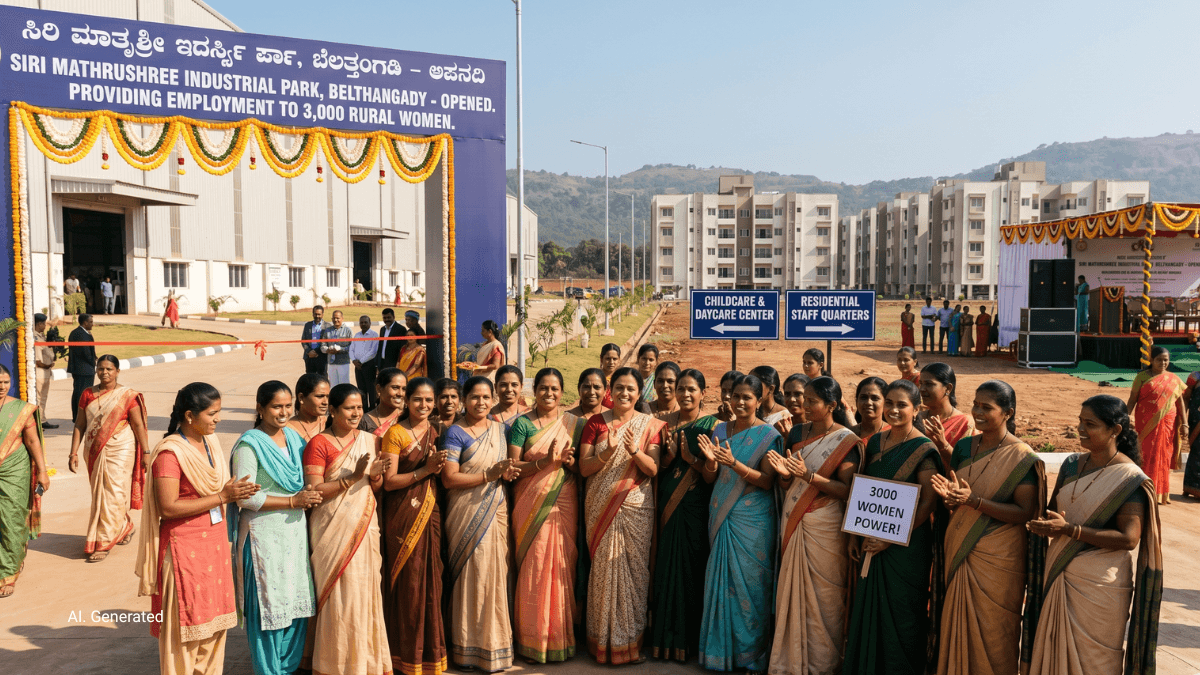
SIRI Mathrushree Industrial Park opens in Belthangady with dedicated childcare and residential facilities for its staff.
The Essentials
The Pulse
SIRI Gramodyoga, the rural enterprise wing of the Shri Kshetra Dharmasthala trust has officially opened its new Mathrushree Industrial Park in Belthangady. Rather than a standalone company, this is a dedicated manufacturing campus where rural women produce the trust’s garments and goods. While corporate offices debate hybrid work setups, this facility focuses entirely on the practical needs of rural workers.
Are rural industrial setups the answer to intense urban migration? Yes, they are, provided they offer the actual infrastructure people need to remain in their home districts. Built under the guidance of Dr. D. Veerendra Heggade and Hemavathi V. Heggade, the project moves far beyond basic employment.
It provides a comprehensive support system, including employee hostels, transport networks, and hygienic kitchens. This ensures that entering the workforce does not mean sacrificing family stability. The entire facility demonstrates how local manufacturing can operate with a genuinely humane, community-first approach.
The Snapshot
ⓘ Sponsored: Unbox Daily HQ earns a commission if you buy through these links, at no extra cost to you. Prices shown are subject to change, and the actual price on Amazon at the time of purchase may vary from what is displayed here.
| Specification | Details |
| Project Name | SIRI Mathrushree Industrial Park |
| Parent Organisation | Shri Kshetra Dharmasthala |
| Location | Belthangady, Dakshina Kannada, Karnataka |
| Direct Beneficiaries | Over 3,000 individuals |
| Indirect Beneficiaries | Over 10,000 individuals |
| Primary Demographic | Women from disadvantaged backgrounds |
| Key Facilities | Hostels, childcare, residential quarters, kitchens, transport |
The Big Picture
Rural employment initiatives often struggle with retention because they ignore the daily realities of their workers. By building childcare and housing directly into the industrial park, the SIRI model addresses the exact barriers that usually force women out of the workforce. This aligns with national efforts towards self-reliance, proving that local manufacturing can scale without exploiting its labour force. When rural industrial networks provide dignity alongside a steady income, they offer a highly viable alternative to the overcrowding seen in major Indian manufacturing hubs like Tiruppur.
The India Prospective
For an Indian professional tracking development, this marks a distinct shift in how tier-three manufacturing setups operate outside major metro clusters. Instead of forcing mass migration to cities like Bengaluru, this project establishes a self-contained workspace directly in Dakshina Kannada. It proves that rural infrastructure can actively support working families by embedding transit, housing, and childcare facilities into the regional layout.
The Inside Intel
The parent institution driving this park has operated under Dr. Heggade’s leadership for nearly six decades. It steadily grew from its spiritual roots at the Dharmasthala temple into a highly structured community welfare network. It currently supports over 10,000 indirect livelihoods across Karnataka while maintaining a strict focus on structural social transformation rather than conventional factory profits.
The Unboxed Truth
Unbox Daily HQ views this as a vital case study for anyone working in social enterprise or rural development. While there is no consumer product to purchase here, the operational model is worth tracking if you are involved in corporate social responsibility or public policy and studying this framework costs you nothing. The integration of childcare and housing is the single element that makes this worth your time to research, proving that humane working conditions are entirely possible outside major metros.
Best for: Policy professionals and social entrepreneurs looking for successful community-based manufacturing models.
Who Is This For: Perfect for 28 to 45 year old professionals in the development sector who need proven case studies on scaling rural businesses.
The Checkout
Shri Kshetra Dharmasthala – Rural Development
The Source
Vice President’s Secretariat | PIB.GOV.
The newly inaugurated industrial park is located in Belthangady, Dakshina Kannada, Karnataka. It is officially open and operates as the rural enterprise wing of the Shri Kshetra Dharmasthala trust. The campus currently supports over 3,000 direct jobs in the region.
The facility prevents forced urban migration by embedding essential daily infrastructure directly into the rural workspace. Employees have access to on-site childcare, residential quarters, employee hostels, and dedicated transportation networks. This approach allows rural workers to earn a steady income without sacrificing family stability.
The facility primarily employs and supports women from disadvantaged backgrounds in rural Karnataka. For professionals working in corporate social responsibility or public policy, it also serves as a vital case study to track. It proves that humane, community-based manufacturing is highly viable outside major metro cities.