UNBOX DAILY HQ.: India’s First Launch Only Hub for Modern Lifestyle | 150+ New Launches Tracked Last Month Across India • 14 Categories • 1 Destination – UNBOX DAILY HQ.| EXPLORE BY CATEGORY: • BUSINESS & SERVICES | • CONSUMER DURABLES | • CONSUMER GOODS | • EDUCATION | • ENTERTAINMENT | • FINANCE | • LIFESTYLE | • HEALTH | • MOBILITY | • PUBLIC PULSE | • REAL ESTATE | • SPORTS | • TECHNOLOGY | • TRAVEL & HOSPITALITY | UNBOX DAILY HQ. – YOUR DAILY DOSE OF DISCOVERY! |
India to Train 1.5 Lakh Caregivers: Budget 2026 Strategy for Geriatric & Wellness Care

Navi Mumbai | editorial@unboxdailyhq.com
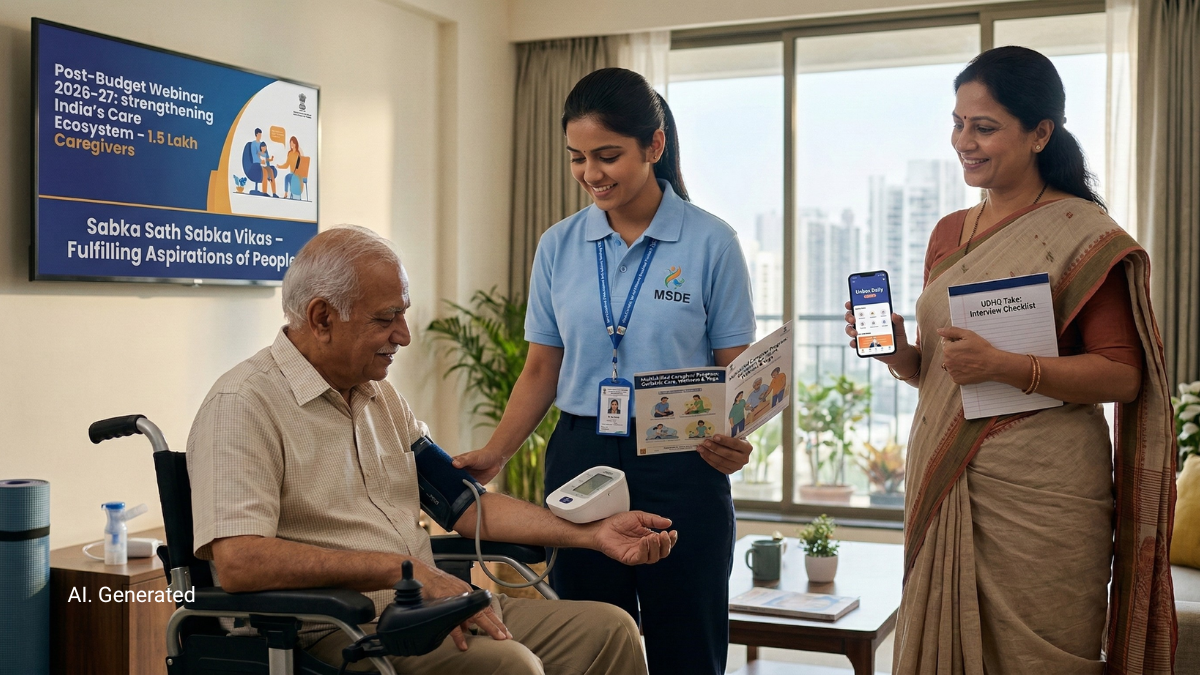
The Government of India is pivoting towards a formal “Care Economy” with a massive plan to train 1.5 lakh multiskilled caregivers this year. Spearheaded by the Ministry of Skill Development & Entrepreneurship (MSDE), this initiative aims to bridge the gap in geriatric and allied health services. By combining core nursing skills with yoga, wellness, and medical device handling, India is preparing a workforce to meet both rising domestic demand and global healthcare shortages.
The Blueprint for a Care-First India
Following the Union Budget 2026–27, the government has moved swiftly into the execution phase. On March 9, 2026, Prime Minister Narendra Modi addressed the “Sabka Sath Sabka Vikas” webinar, specifically highlighting Para-54 of the budget. This clause is the engine behind the new care ecosystem, mandating the creation of NSQF-aligned programs (National Skills Qualification Framework) that go beyond traditional medical aid.
The strategy focuses on creating specialized roles to ensure high standards of care. The MSDE is leveraging its heavy hitters: the NCVET, Sector Skill Councils, and ITIs. To understand how this impacts the ground level, here is a breakdown of the key roles being standardized:
| Role | Core Focus | Key Skills | Best For |
| Geriatric Caregiver | Elderly-specific care | Dementia support, mobility assistance, geriatric nutrition. | Families with seniors needing long-term daily living support. |
| Home Health Aide | Medical support at home | Vitals monitoring, medication management, basic wound care. | Post-surgery recovery or patients with chronic illnesses. |
| General Duty Assistant | Hospital & Allied support | Patient transport, hygiene care, assisting clinical staff. | Hospital environments or large-scale assisted living facilities. |
| Multiskilled Caregiver | Holistic Wellness care | Yoga, medical device operation (CPAP, Oxygen), and mental wellness. | Premium home-care where physical and mental health are prioritized. |
The ultimate goal is twofold: provide dignity and quality care to India’s aging population and position Indian youth as the preferred choice for the global caregiving market.
Global Trends: The global geriatric care market is projected to hit nearly $1.5 trillion by late 2026, driven by “aging-in-place” models in North America and Europe. India faces stiff competition from the Philippines and Japan, who have long dominated the export of healthcare staff. However, India’s edge lies in its cost-leadership and the “multiskilled” approach. While traditional competitors focus on clinical nursing, India is integrating AYUSH (Ayurveda, Yoga, and Naturopathy) into caregiving, a unique selling point that appeals to the growing global preference for holistic and preventive healthcare.
Trivia: Did you know that India is currently home to over 150 million senior citizens? By 2050, this number is expected to triple, making the “Silver Economy” one of the fastest-growing sectors in the country. Interestingly, the term “Care Economy” doesn’t just refer to medical help, it includes all unpaid or paid labor dedicated to the well-being of others, which accounts for nearly 9% of global GDP.
UDHQ Take: At Unbox Daily HQ, we see this as a massive win-win for the Indian middle class. For years, finding a reliable, trained professional to care for elderly parents at home has been a chaotic, “word-of-mouth” struggle. This initiative finally brings structure and trust to a fragmented sector.
By standardizing qualifications through the National Council for Vocational Education and Training (NCVET), the government is essentially “unboxing” a new career path for millions of youth while solving a deeply personal problem for families. Imagine having a caregiver who doesn’t just “watch” a patient, but understands physiotherapy, manages digital health records, and can guide a senior through a safe yoga routine. That is the value on the table. This isn’t just about jobs; it’s about improving the Quality of Life for our seniors and giving families the peace of mind they’ve been waiting for.
Source: PIB.GOV.
How do I verify if a caregiver is part of the 1.5 lakh ‘Multiskilled’ workforce announced in the 2026 Budget?
Always ask for their Aadhaar-linked Skill Certificate or NCVET Certificate ID. You should ask: “Can you provide your digital certificate number so I can verify your credentials on the NCVET Portal?” Authentic 2026-batch caregivers will have certifications aligned with the National Skills Qualification Framework (NSQF).
What specific ‘Multiskilling’ questions should I ask during the interview?
Since the new curriculum merges care with wellness, ask: “What specific Yoga or light mobility stretches are you trained to perform with seniors?” and “Which medical devices (like CPAP, Oxygen Concentrators, or Digital BP monitors) are you certified to operate?” You are looking for a professional who understands both clinical vitals and holistic wellness.
How can I test their emergency response and crisis management skills?
Pose a “What If” scenario: “If my parent suddenly feels dizzy or falls while I am away, what are your immediate next three steps?” A trained pro will answer:
1. Stabilize the patient and check vitals,
2. Alert the emergency contact/doctor immediately, and
3. Document the incident and symptoms for the medical record.
Will these caregivers handle digital health records and doctor tele-consultations?
Yes, that is a key value of the 2026 initiative. Ask: “Are you comfortable using smartphone apps to log daily vitals and assisting my parents during a video call with their doctor?” This ensures the “Care Ecosystem” is data-driven and provides you with real-time peace of mind.
How do I differentiate between a Home Health Aide and a Geriatric Caregiver?
Ask: “Is your training focused on clinical recovery or long-term elderly support?” A Home Health Aide is best for post-surgery or chronic illness (wound care, meds), while a Geriatric Caregiver is specialized in age-related needs like dementia support, fall prevention, and geriatric nutrition.
What is a quick ‘practical trial’ I can conduct before hiring?
Conduct a “Skill Demo”. Ask them to demonstrate a “Patient Transfer” (moving someone from a bed to a wheelchair). Watch for proper body mechanics, they should lift with their legs, not their back and observe if they instinctively sanitize their hands before the task.
How does this new Indian workforce compare to global standards?
India’s 2026 skilling model is unique because it integrates AYUSH (Yoga/Wellness) with medical care. Ask the candidate: “How do you incorporate preventive wellness into a daily routine?” This “High-Tech, High-Touch” approach is what makes Indian caregivers competitive in the $1.5 trillion global care market.