
UNBOX DAILY HQ.: India’s First Launch Only Hub for Modern Lifestyle | 150+ New Launches Tracked Last Month Across India • 14 Categories • 1 Destination – UNBOX DAILY HQ.| EXPLORE BY CATEGORY: • BUSINESS & SERVICES | • CONSUMER DURABLES | • CONSUMER GOODS | • EDUCATION | • ENTERTAINMENT | • FINANCE | • LIFESTYLE | • HEALTH | • MOBILITY | • PUBLIC PULSE | • REAL ESTATE | • SPORTS | • TECHNOLOGY | • TRAVEL & HOSPITALITY | UNBOX DAILY HQ. – YOUR DAILY DOSE OF DISCOVERY! |
India’s Big AI Leap: 20,000 New GPUs to Power Startups at Just ₹65/Hour

Navi Mumbai | editorial@unboxdailyhq.com
India is supercharging its “Sovereign AI” dream by adding 20,000 high-end GPUs to its national cluster, crashing compute costs to ₹65/hour to help domestic startups build world-class AI models.
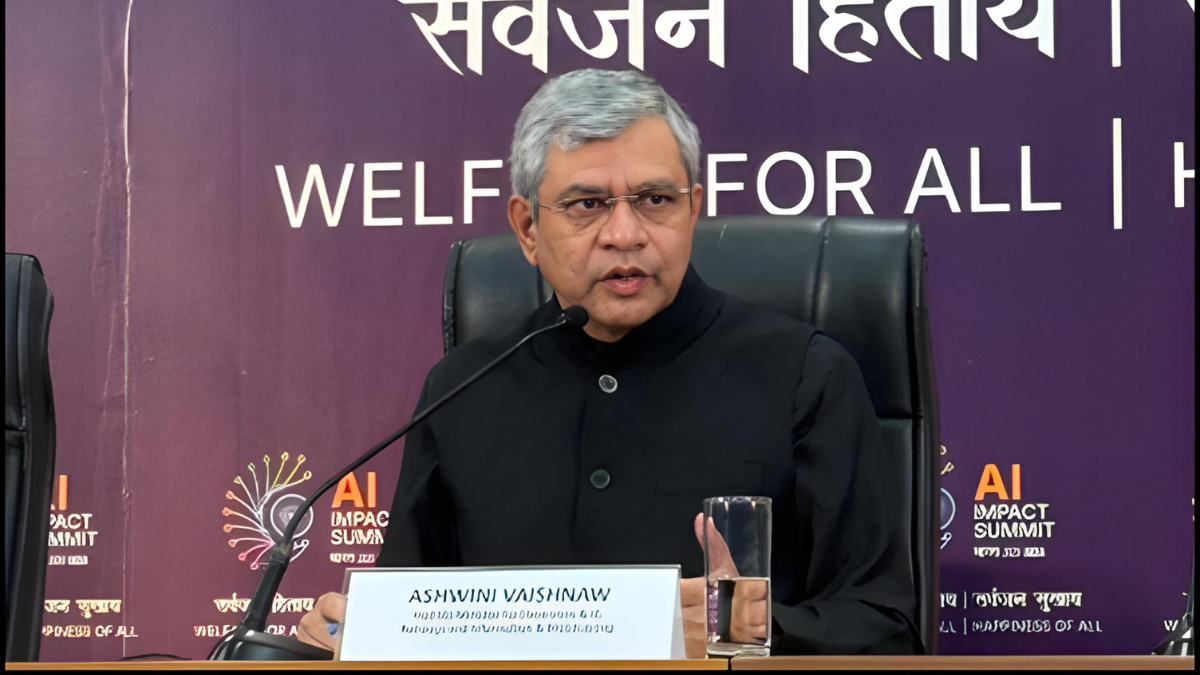
In a massive boost to the country’s tech ecosystem, Union Minister for Electronics and Information Technology Ashwini Vaishnaw officially announced a major capacity expansion under the ₹10,300 crore IndiaAI Mission. During the India AI Impact Summit 2026 at Bharat Mandapam, the government committed to adding 20,000 high-end GPUs to the nation’s existing 38,000-unit pool. This expansion is not just about raw power; it’s a strategic strike against the high costs that often kill deep-tech startups in their infancy. By offering subsidized compute access at a disruptive rate of ₹65 per hour, roughly one-third of the global average. The IndiaAI Mission is effectively democratizing the “Fifth Industrial Revolution.”
The core objective is to break the monopoly of global tech giants over expensive AI infrastructure. This move allows Indian researchers, students, and public institutions to develop indigenous foundation models (like the newly launched Sarvam AI or BharatGen’s Param 2) without the burden of massive capital expenditure. Strategically, this positions India as a global “Compute Hub,” shifting the national focus from just using AI to building it for critical sectors like healthcare, precision agriculture, and localized manufacturing.
Where is the Setup and How to Opt-In?
The current infrastructure isn’t locked in a single basement; it’s a Public-Private Partnership (PPP) model.
- Primary Clusters: The existing 38,000 GPUs are hosted across Tier-IV data centers, with major hubs at Yotta’s Greater Noida (D2) and Navi Mumbai campuses, as well as C-DAC facilities in Pune and Bengaluru.
- Data Labs: To ensure regional access, the government is establishing 600 Data Labs across Tier-2 and Tier-3 cities to help local talent bridge the gap between “code” and “compute.”
How to Apply: Startups and researchers can apply through the IndiaAI Unified Compute Platform. Once registered and verified as an “AI Impact Startup,” you can book compute slots on the AI Marketplace, which functions like a “travel booking site” for GPU power.
The Global AI Chessboard
Globally, the race for “Sovereign AI” has intensified. While the US and China lead in raw GPU volume, their infrastructure is largely held by private hyperscalers. India’s model is unique because it treats Compute as a Public Good, similar to how UPI treated digital payments. By comparison, while a single US corporation might spend billions on chips annually, India’s focused subsidy model ensures that even a small startup in a Tier-2 city has the same “firepower” as a Silicon Valley firm.
GPU Cost Comparison (2026 Estimates)
| Provider | GPU Type (High-End) | Hourly Rate (Approx.) |
| IndiaAI Mission | NVIDIA H100 / Blackwell | ₹65 (Subsidized) |
| AWS / Azure | NVIDIA H100 | ₹350 – ₹800 |
| Google Cloud | Google Trillium TPU | ₹250 – ₹600 |
| Private Indian Clouds | NVIDIA H100 | ₹180 – ₹350 |
Trivia: The term “Sovereign AI” refers to a nation’s ability to produce AI using its own infrastructure, data, and networks. India is currently ranked among the top three AI nations globally by Stanford, and with this expansion, it aims to lead the Global South in “responsible AI” deployment.
UDHQ Take: This isn’t just a government policy; it’s a “reset button” for the Indian middle-class innovator. Think back to when data was expensive, we only used it for basic emails. When data became cheap, we built a digital economy. This GPU expansion does the same for intelligence. By bringing down the cost to ₹65/hour, the government is essentially giving every Indian engineer a “supercomputer in their pocket.”
At Unbox Daily HQ, we see this as the ultimate fuel for the next generation of Indian Unicorns. This value-driven infrastructure means the next “ChatGPT” or a life-saving AI diagnostic tool for rural India doesn’t need a billion-dollar VC check to start, it just needs a great idea and a few hours of subsidized compute. It’s a move toward a Viksit Bharat where we don’t just export code, we export intelligence. For the average citizen, this translates to faster, cheaper, and more accurate digital services in your own language.
Source: PIB.GOV.