Thursday, May 28, 2026 |Navi Mumbai
--:-- | --°C | AQI --
If it's not on Unbox Daily HQ, it's not a Launch. Every product, policy and brand launch in India. One hub. What's new?
The upcoming DILRMP 3.0 policy will introduce completely paperless property registration across India.
The Takeaway
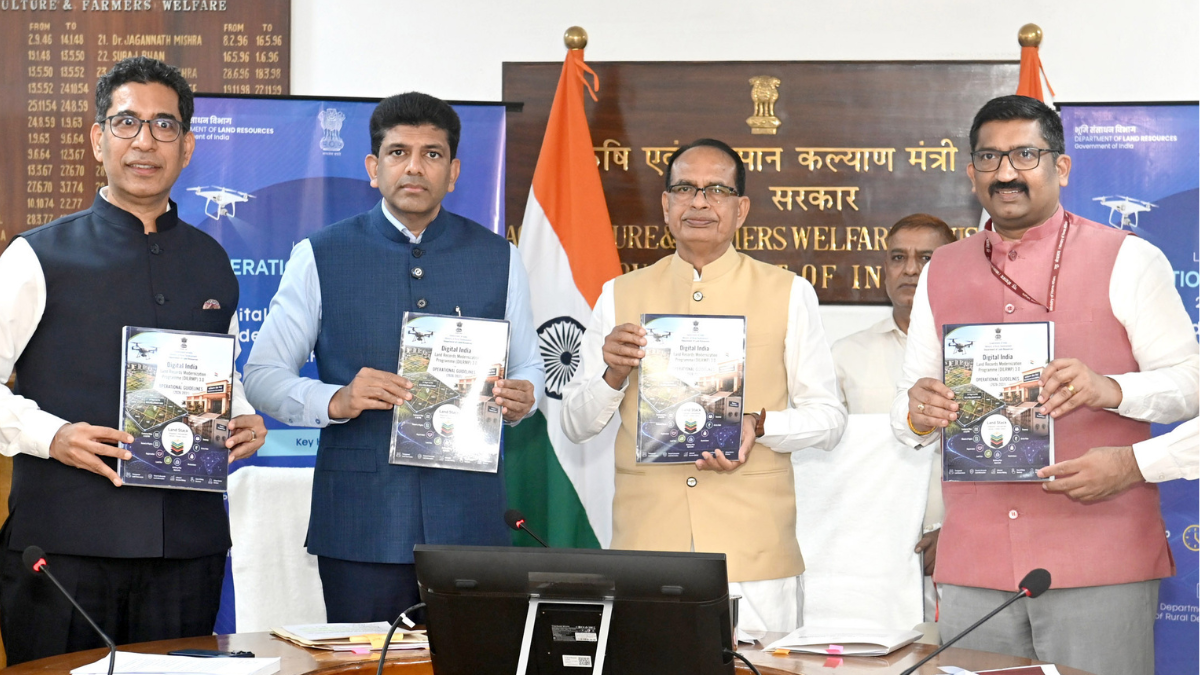
Department of Land Resources recently published the latest operational guidelines for managing property records. This policy dictates national land governance. Government representatives conducted the formal rollout presentation on Thursday, 10 September 2026, at 6:30 PM. The massive five-year central sector scheme sets a clear course for standardising real estate administration across every single state and union territory.
The recent completion of the urban NAKSHA pilot signals a major expansion of these digital efforts into complex city landscapes. By extending into metropolitan regions, the government tackles administrative challenges that are historically much harder to map than rural parcels.
What separates this third phase from earlier digitisation efforts is the creation of a fully interoperable digital ecosystem called the Land Stack. Instead of merely keeping basic electronic files, this Digital Public Infrastructure connects cadastral maps directly to ownership details and property registration. It also integrates a modern paperless Revenue Court Case Management System. Tying ongoing legal disputes directly into the ownership database helps track conflicts transparently while cutting down the financial cost of legal battles.
DILRMP 3.0 budget and rollout facts
| Feature | Confirmed details |
| Total financial outlay | 565.50 crore |
| Implementation timeline | 2026 to 2031 |
| Primary focus area | Ease of Living |
| Technical design | API-based secure integration |
Managing property effectively in India often involves navigating a maze of disconnected local authorities. A national overhaul requires strict compliance from state-level departments, meaning citizens might see staggered availability for completely proactive services. Much like the mentorship portal that fixes rural credit barriers, this framework relies on an upgraded MIS dashboard to track real-time progress on the ground. Surprisingly, the government explicitly designed the system to completely remove the requirement for people to travel physically to administrative buildings.
ⓘ Sponsored: Unbox Daily HQ earns a commission if you buy through these links, at no extra cost to you. Prices shown are subject to change, and the actual price on Amazon at the time of purchase may vary from what is displayed here.
The Unboxed Truth
Unbox Daily HQ expects the DILRMP 3.0 framework to drastically simplify how you verify property lines. You are finally getting a system that treats land ownership as a connected digital network rather than isolated stacks of paper. The direct linkage of court cases to property coordinates will save you significant time when verifying a clean title before a purchase. Because this massive 565.50 crore project relies on ground-level execution, you might still face administrative friction in your specific district before the paperless benefits fully materialise.
Best for: Anyone acquiring or transferring real estate who needs a transparent digital trail.
Who Is This For: 30 to 55 years old.
Courtesy: Department of Land Resources
The central government has allocated a total financial outlay of 565.50 crore for this massive five-year roadmap. This digital framework will roll out across all states and union territories between 2026 and 2031. A dedicated 37.5 crore sub-allocation will upgrade 75 traditional sub-registrar offices into modern service centres.
This third phase moves beyond basic electronic files to establish a fully interoperable digital ecosystem known as the Land Stack. It directly connects cadastral maps, ownership details, and property registration into one unified network. The system also uniquely integrates a modern paperless Revenue Court Case Management System.
This system is a highly necessary upgrade for anyone between 30 and 55 years old who is currently acquiring or transferring real estate. Tying legal disputes directly to property coordinates will save buyers significant time when verifying a clean title. It finally guarantees a transparent digital trail.