Thursday, May 28, 2026 |Navi Mumbai
--:-- | --°C | AQI --
If it's not on Unbox Daily HQ, it's not a Launch. Every product, policy and brand launch in India. One hub. What's new?
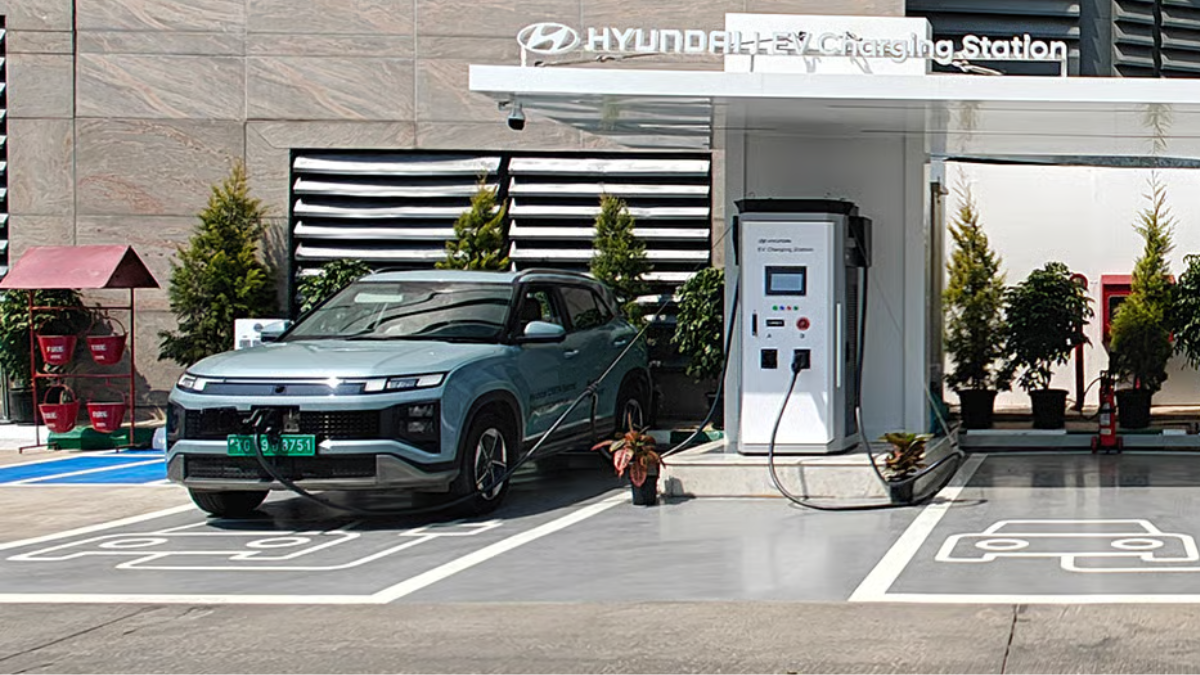
Hyundai aggregates 30,000 chargers across all EV brands, placing a station within a 25-kilometre radius on average.
The Essentials
The Pulse
Hyundai Motor India integrates its service application into one of the country’s largest electric vehicle charging networks. Opening access to 30,000 points across the nation, this update targets the primary friction point of electric mobility: highway range anxiety and fragmented payment systems. This means a driver travelling from Chennai to Bengaluru no longer needs to shuffle between different operator platforms to find a working station.
The application covers major arterial routes including Delhi-Gurgaon-Jaipur and Mumbai-Pune-Bengaluru. While Hyundai continues to expand its own proprietary network of 183 DC fast-charging stations across 105 cities, the immediate volume comes from strategic partnerships with established service providers. This move aligns with the manufacturer’s preparations to enter the mass-market electric SUV segment later this financial year, establishing the necessary infrastructure before introducing a higher volume of vehicles to the road.
To date, the company’s proprietary network has dispensed over 50 lakh kilowatt-hours of energy to more than three lakh users. By opening the gates to non-Hyundai vehicles, the automaker shifts from simply selling cars to operating a core utility service for the broader electric vehicle market.
The Breakdown
ⓘ Sponsored: Unbox Daily HQ earns a commission if you buy through these links, at no extra cost to you. Prices shown are subject to change, and the actual price on Amazon at the time of purchase may vary from what is displayed here.
The technical execution relies on aggregating multiple application programming interfaces from independent operators into one unified digital dashboard. The platform supports complete transaction cycles, including location mapping, real-time availability checking, advance station booking, and final digital payment processing. On the hardware side, Hyundai’s proprietary contribution consists of DC fast-charging units with outputs ranging from 60 kilowatts to 240 kilowatts. These first-party stations are deliberately positioned near highway food chains and metropolitan eateries to align vehicle charging periods with natural driver breaks. The manufacturer commits to expanding this specific proprietary hardware footprint to 600 locations by the year 2030, supplementing the wider third-party network.
The Distinction
The structural differentiator here is the consolidation of fragmented charging infrastructure by an automotive manufacturer for universal access. Typically, EV owners must download a dozen different applications to access various Charge Point Operators across intercity routes. By integrating third-party networks alongside their proprietary fast-charging stations into the myHyundai application, the company transforms a branded utility tool into an open-access aggregator. This architectural shift provides a single node for discovery, reservation, and payment across multiple charging brands, a utility normally reserved for independent third-party platforms rather than an automaker’s proprietary software.
The Snapshot
| Feature | Specification |
| Application | myHyundai |
| Total Charging Points | Over 30,000 |
| Average Station Radius | 25 km |
| Proprietary DC Fast Chargers | 183 stations (expanding to 600 by 2030) |
| Fast Charger Capacity | 60 kW to 240 kW |
| Vehicle Compatibility | Open to all EV brands |
| Key Supported Routes | Delhi-Jaipur, Mumbai-Bengaluru, Chennai-Bengaluru |
| Availability | Currently live in India |
The Big Picture
India’s public charging infrastructure has historically been dominated by independent energy companies like Tata Power or pure-play startups like ChargeZone. Automakers typically build closed networks for their own buyers. Hyundai is breaking this pattern by operating an open aggregator model ahead of its mass-market SUV launch. By inviting rival vehicle owners into their digital platform, they secure early data on national transit patterns while solving the fragmentation problem that keeps many buyers hesitant about the electric transition.
The India Prospective
For the Indian highway commuter, this addresses the specific reality of unpredictable infrastructure. Indian arterial routes often suffer from offline chargers or incompatible payment gateways. A consolidated platform guaranteeing stations within a 25-kilometre radius on routes like Mumbai-Ratnagiri-Goa directly counters the primary reason diesel remains the default choice for long-distance travel. The integration with domestic digital payment infrastructure further simplifies the cross-state transit experience.
The Inside Intel
Before integrating these 30,000 third-party points, Hyundai’s proprietary network of just 183 stations managed to dispense over 50 lakh kilowatt-hours of energy to three lakh users. This intense volume translates to roughly 3.5 million kilogrammes of saved carbon emissions, proving that Indian drivers were heavily utilising the existing highway fast-chargers well before this nationwide platform consolidation took place.
The Unboxed Truth
Unbox Daily HQ considers this the most practical software update for electric vehicle owners traversing Indian highways this year. For a 35-year-old professional attempting weekend drives from Hyderabad to Kurnool, downloading five different regional charging applications is an active deterrent to taking the car out of the city. By acting as a universal aggregator, this platform removes the administrative headache of electric transit. It offers honest utility because it does not lock the service behind a brand wall, an MG or Tata owner benefits just as much as a Hyundai driver. The assurance of a charging point every 25 kilometres changes the mathematics of road trips, shifting the electric vehicle from a city runabout to a legitimate touring machine.
Best for: Intercity commuters who drive electric vehicles and want a single application for highway charging stops.
Who Is This For: Perfect for 30 to 50-year-old professionals in metropolitan areas who frequently take road trips and require reliable infrastructure tracking.
The Checkout
The Source
Hyundai Motor India
The Query
The myHyundai EV charging network is currently live in India, offering access to over 30,000 charging points nationwide. The service is integrated into the myHyundai application and is available to electric vehicle owners across all vehicle brands without requiring a brand-specific subscription.
Unlike independent operator apps, the myHyundai platform aggregates third-party charging networks alongside Hyundai’s proprietary fast-charging stations into a single digital interface. It provides location discovery, advance station booking, and digital payments across multiple operators for all electric vehicle brands. This eliminates the need to maintain multiple individual provider applications during intercity travel.
The myHyundai application is worth using for any electric vehicle owner undertaking intercity road trips in India. It consolidates 30,000 charging points into one interface with an average station radius of 25 kilometres along major highways. This single platform solves the administrative hassle of managing multiple operator accounts while travelling cross-country.