Thursday, May 28, 2026 |Navi Mumbai
--:-- | --°C | AQI --
If it's not on Unbox Daily HQ, it's not a Launch. Every product, policy and brand launch in India. One hub. What's new?
Google’s NotebookLM now requires an AI Ultra subscription, adding code execution and native Excel and PowerPoint exports.
The Essentials
The Pulse
Google is upgrading NotebookLM from a passive reading tool into an active research assistant powered by Gemini 3.5 and Antigravity. The update shifts the focus from simple text summaries to complex data handling, operating entirely through a secure cloud computer that can write and execute its own code.
Does NotebookLM require a paid subscription? Yes, to access these new features, users must have a Google AI Ultra subscription or an eligible Workspace business account. The update is rolling out globally on the web today.
The biggest shift is how the tool handles raw information. If you upload messy financial spreadsheets from different regions, the system uses its 100 newly curated software skills to clean the data, run calculations, and export proper visualisations. You no longer need to bring your own documents upfront either, as the assistant can now actively search the internet to build a verified source repository for your specific project. This means you can start with a vague idea and let the software find the primary sources.
The Snapshot
ⓘ Sponsored: Unbox Daily HQ earns a commission if you buy through these links, at no extra cost to you. Prices shown are subject to change, and the actual price on Amazon at the time of purchase may vary from what is displayed here.
| Specification | Details |
| Product | NotebookLM |
| Developer | |
| Core Engines | Gemini 3.5 and Antigravity |
| Software Skills | Over 100 curated capabilities |
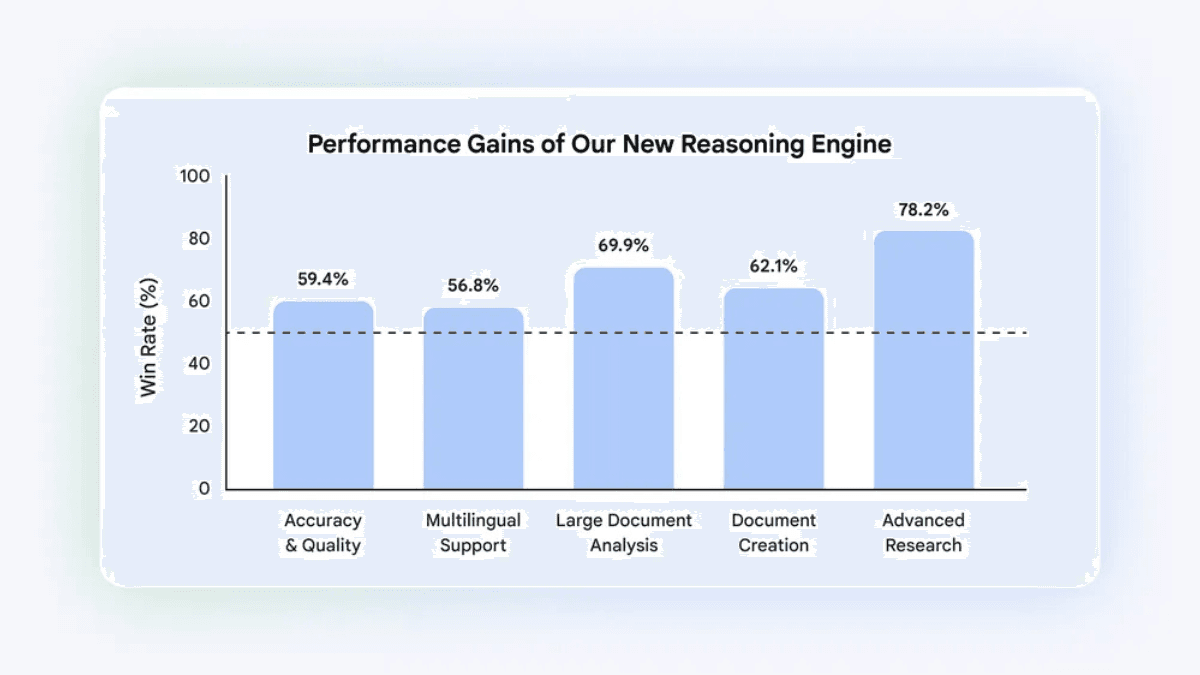
| Document Analysis | 69.9% win rate vs prior system |
| Web Research | 78.2% win rate vs prior system |
| Document Outputs | PDF, DOCX, Markdown, Text |
| Data Outputs | CSV, JSON, XLSX, PPTX |
| Image Outputs | PNG, SVG, JPG, GIF (via Nano Banana) |
| Global Availability | Rolling out today |
| India Price | Requires Google AI Ultra (starts at ₹6,500/month) |
The Big Picture
The transition from text generation to autonomous task execution marks a turning point in workplace software. While platforms like Anthropic’s Claude handle complex document analysis, giving an AI the autonomy to compile visual charts and export native Excel files directly addresses the tedious formatting work that consistently slows down corporate teams. For Indian businesses managing heavy data synthesis across multiple regional markets, the ability to pull live web research and instantly structure it into boardroom-ready formats creates a genuine operational shortcut for project managers.
The India Prospective
At a starting price of ₹6,500 per month for the required Google AI Ultra subscription, this tool targets serious Indian professionals rather than casual users. For corporate data analysts in Bengaluru or Mumbai, the ability to instantly format conflicting international data into clean PDFs directly addresses a major daily friction point. However, this high monthly cost means small business owners must carefully weigh the automated data analysis benefits against the significant subscription expense.
The Inside Intel
The most surprising addition to this upgrade is the integration of Nano Banana for image creation. While Google typically relies on its own core Imagen models for visual generation across its services, NotebookLM specifically incorporates this distinct framework. It allows the system to produce precise graphics, including JPG, PNG, and GIF outputs, based directly on the deep research context gathered in your active notebook.
The Unboxed Truth
Unbox Daily HQ recommends upgrading if your daily work involves synthesising disorganised data into presentations. For analysts and managers, the ability to dump raw numbers and retrieve formatted PowerPoint slides or Excel sheets justifies the high cost of an AI Ultra subscription. If you only use the platform for basic reading or note-taking, standard free alternatives remain sufficient. This update specifically targets professionals who need to produce structured outputs rather than just summaries.
Best for: Corporate analysts in Bengaluru who spend hours manually formatting reports.
Who Is This For: Perfect for 28 to 45-year-old project managers in corporate strategy who need to turn messy raw data into structured visual presentations.
The Checkout
The Source
Google Global
To use the newly upgraded features, you need a paid Google AI Ultra subscription, which starts at ₹6,500 per month. Workspace business users can also access these tools if they have AI Ultra Access or AI Expanded Access.
While Anthropic’s Claude focuses primarily on analyzing complex documents, NotebookLM uses a secure cloud computer to actively write and execute its own code. This allows it to clean conflicting spreadsheets, run data calculations, and export native Excel or PowerPoint files directly.
If you are a corporate analyst or project manager dealing with disorganized data across different regional markets, the ability to instantly generate presentation decks and charts justifies the high subscription price. For casual users who only need simple summaries or document reading, the platform’s high monthly cost is likely not worth the investment.